
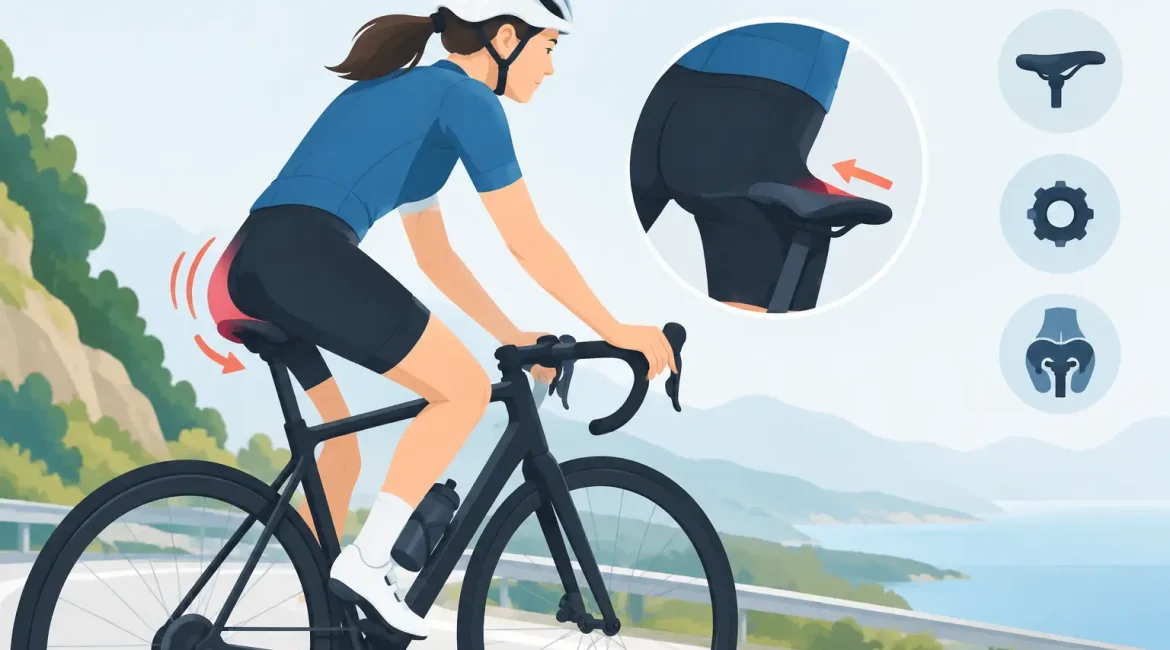
Se ti chiedi «perché scivolo sulla sella?», non stai descrivendo un piccolo fastidio da ignorare. Stai segnalando che il tuo corpo non trova un appoggio stabile e che, a ogni pedalata, deve correggere una posizione sbagliata. Il risultato è familiare a molti ciclisti: mani sovraccariche, braccia rigide, sfregamento all’inguine, pressione sul perineo e la sensazione di dover continuamente risalire verso la parte posteriore della sella.
Scivolare non è quasi mai un problema di scarsa aderenza del pantaloncino. Più spesso è il sintomo di un’interazione difettosa tra inclinazione della sella, assetto della bici, forma del sedile e anatomia del ciclista. Aggiungere grip può mascherare il movimento, ma non elimina la pressione che lo genera.
Perché scivolo sulla sella: le cause principali
La causa più comune è una sella inclinata troppo verso il basso. Quando il naso punta decisamente a terra, il bacino viene spinto in avanti dalla gravità. Per non finire contro il manubrio, il ciclista si aggrappa alle leve, irrigidisce le spalle e contrae il tronco. Nelle prime pedalate può sembrare una soluzione contro la pressione anteriore; dopo un’ora diventa un trasferimento del problema su mani, collo e perineo.
Anche pochi millimetri contano. Un’inclinazione leggermente negativa può essere utile per alcuni rider con posizione molto aggressiva, ma oltre una certa soglia la sella smette di sostenere le tuberosità ischiatiche – le ossa su cui dovresti realmente sedere. Se gli ischi non hanno una piattaforma stabile, il bacino cerca appoggio più avanti, dove i tessuti molli non sono progettati per portare carico.
La seconda causa è l’altezza eccessiva della sella. Se a fondo pedalata il bacino oscilla lateralmente o devi allungare la punta del piede per raggiungere il pedale, il corpo scivola e ruota a ogni giro di pedivella. Non sempre il movimento è evidente dall’esterno: può essere un micro-spostamento continuo, sufficiente a creare calore, attrito e irritazione cutanea sulle lunghe distanze.
Poi c’è l’arretramento. Una sella troppo avanzata può spostare troppo peso sulle mani e indurre il bacino a cercare una via di fuga in avanti. Una sella troppo arretrata, invece, può obbligarti a scivolare sul naso per raggiungere efficacemente i pedali e il manubrio. Non esiste una posizione universale: dipende da mobilità, lunghezza del busto, disciplina, geometria del telaio e posizione dei tacchetti. Ma se devi sempre riposizionarti, l’assetto merita attenzione.
La superficie non basta: il problema è dove finisce il carico
Una sella liscia può accentuare la sensazione di scivolamento, soprattutto con pantaloncini consumati, pelle sudata o fondello inadeguato. Tuttavia, una copertura più ruvida non trasforma una cattiva distribuzione della pressione in una buona posizione. Anzi, se la superficie blocca il corpo mentre il bacino è costretto a una postura errata, può aumentare lo sfregamento localizzato.
Il punto decisivo è capire dove stai caricando il peso. Una sella convenzionale con naso alto e lungo tende a creare un conflitto: per sostenere il ciclista nella posizione avanzata, chiede ai tessuti perineali di sopportare pressione e attrito. Molti ciclisti reagiscono inclinando molto il naso verso il basso. È un tentativo logico, ma spesso incompleto: riduce una pressione e ne crea un’altra, cioè lo scivolamento in avanti.
Questo spiega perché una sella morbida non sia automaticamente più confortevole. Se l’imbottitura cede troppo, gli ischi affondano, il bacino perde una base definita e i tessuti molli vengono compressi ai lati o anteriormente. Il comfort iniziale può durare pochi chilometri; poi arrivano instabilità e calore. Serve sostegno controllato, non una superficie che collassa sotto il peso.
Come capire quale regolazione ti sta facendo scivolare
Prima di cambiare sella o modificare radicalmente il bike fit, osserva quando compare il problema. Se scivoli fin dai primi minuti su strada pianeggiante, guarda prima inclinazione e altezza. Se accade soprattutto quando pedali in presa bassa o con le prolunghe, la combinazione tra reach, dislivello sella-manubrio e forma del naso è probabilmente il fattore dominante. Se compare dopo due o tre ore, entrano in gioco anche affaticamento del core, sudore, fondello e pressione progressiva sui tessuti.
Inizia dalla sella in posizione quasi orizzontale, misurata sulla parte funzionale di appoggio e non su curve decorative o sul solo naso. Fai una regolazione minima alla volta: un piccolo cambiamento di inclinazione, seguito da una prova reale, è più utile di una modifica drastica. Dopo il test, chiediti se il bacino resta fermo, se le mani portano meno peso e se riesci a pedalare senza spingerti indietro ogni pochi minuti.
Controlla anche l’altezza. Una sella abbassata di pochi millimetri può ridurre l’oscillazione pelvica senza compromettere la potenza. Se però la abbassi troppo, aumenti la flessione del ginocchio e potresti caricare eccessivamente la parte anteriore dell’articolazione. L’obiettivo non è sentirsi seduti bassi, ma mantenere il bacino stabile attraverso l’intero arco di pedalata.
Infine, verifica pantaloncino e fondello. Un fondello deteriorato, cuciture che segnano la zona inguinale o un tessuto che trattiene umidità possono moltiplicare gli effetti di un assetto già imperfetto. Il pantaloncino deve seguire il corpo senza creare pieghe. Non indossare biancheria sotto il fondello: aggiunge cuciture, trattiene sudore e crea ulteriori punti di attrito.
Quando è la forma della sella a creare il problema
Se hai regolato correttamente altezza, arretramento e inclinazione ma continui a scivolare, non insistere nel compensare una geometria che non rispetta la tua anatomia. Una sella può avere la larghezza corretta e restare comunque inadatta perché il suo naso invade l’area perineale, perché la parte posteriore non sostiene davvero gli ischi o perché le sue superfici costringono il bacino a ruotare.
Per i ciclisti che adottano una postura più avanzata, la priorità è separare con chiarezza le zone di sostegno dalle zone da proteggere. Gli ischi devono ricevere il carico. Il perineo, i genitali e le strutture vascolo-nervose non dovrebbero essere usati come una terza gamba della sella. Intorpidimento, formicolio, bruciore o dolore alla prostata non sono il prezzo normale di una lunga uscita: sono segnali di pressione da correggere.
Una struttura anatomica con naso basso, appoggi separati e orientati e schiuma ad alto ritorno elastico può offrire una base più stabile senza richiedere di abbassare eccessivamente il naso. È il principio alla base di Aeroelastic AE Saddle: lasciare che il bacino si sostenga sugli ischi, riducendo il contatto critico nella zona centrale. La differenza non è estetica. È biomeccanica: meno pressione sui tessuti molli significa meno necessità di scivolare in avanti per cercare sollievo.
Naturalmente, anche una sella anatomica richiede un adattamento accurato. Una forma diversa modifica il modo in cui percepisci l’appoggio e può richiedere piccoli interventi su altezza e arretramento. Il vantaggio è che le regolazioni servono a rifinire il posizionamento, non a compensare una pressione strutturale sul perineo.
Non correggere lo scivolamento con più tensione
Molti rider rispondono allo scivolamento stringendo il manubrio, arretrando forzatamente il bacino o pedalando con il core contratto. È una strategia costosa: riduce la libertà respiratoria, affatica spalle e lombari e peggiora la qualità della pedalata. Se devi lottare contro la sella, la bici sta consumando energia che dovrebbe andare alla strada.
Una prova utile è un’uscita di almeno 60-90 minuti su un percorso noto. Osserva quante volte devi risistemarti, se le mani diventano indolenzite e se il fastidio si concentra sempre nello stesso punto. Non giudicare la sella solo nei primi dieci minuti: la pressione che conta è quella che resta dopo molte migliaia di pedalate.
La posizione giusta non ti trattiene con attrito. Ti sostiene con precisione. Quando il bacino trova un appoggio stabile sugli ischi e il perineo resta libero da carico inutile, smetti di scivolare, smetti di compensare e puoi tornare a concentrarti su ciò che conta davvero: pedalare più a lungo senza pagarlo con dolore.
