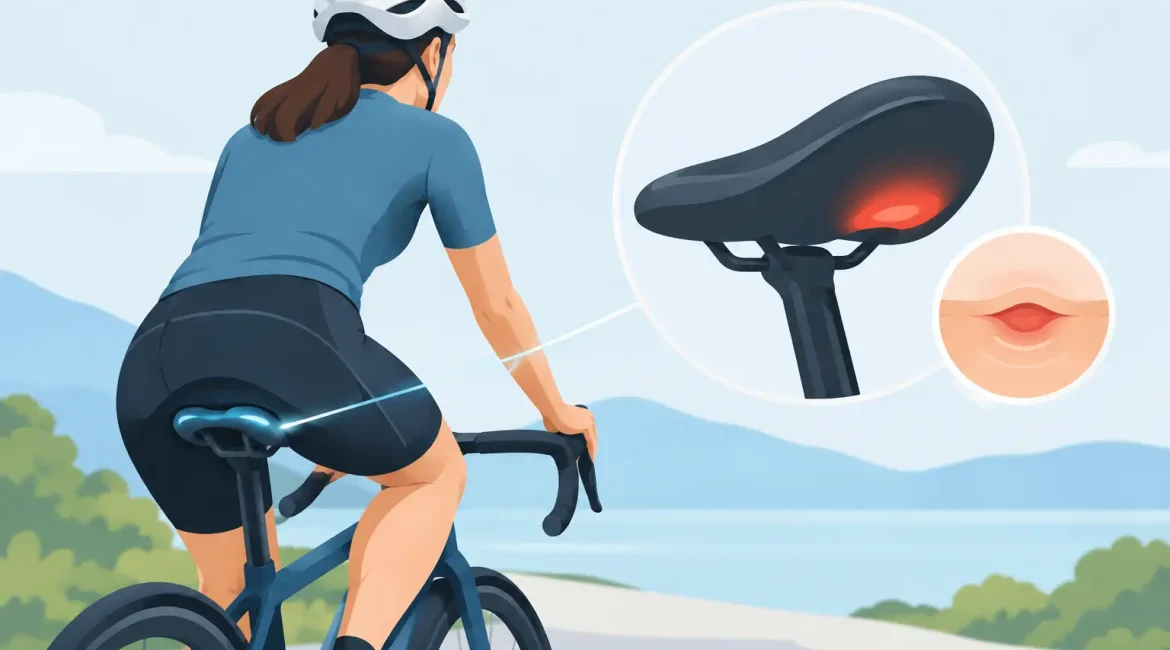
Piaghe da sella: fermarle prima del dolore

Piaghe da sella: fermarle prima del dolore

Le piaghe da sella non sono un inevitabile prezzo da pagare per pedalare a lungo. Sono il segnale che pelle, pressione, umidità e movimento stanno lavorando contro di te. Continuare a uscire ignorando bruciore, arrossamento o noduli dolorosi trasforma spesso un fastidio risolvibile in un problema che impone giorni, talvolta settimane, lontano dalla bici.

Per un ciclista endurance, una sella che crea lesioni non è solo scomoda: altera la posizione, riduce la potenza sostenibile e può aumentare la pressione su perineo e strutture sensibili. La soluzione non è semplicemente aggiungere imbottitura. Occorre eliminare la causa meccanica dello sfregamento e distribuire il carico dove il corpo è progettato per sostenerlo: sulle ossa ischiatiche.

Cosa sono davvero le piaghe da sella

Con il termine piaghe da sella si indicano irritazioni cutanee, abrasioni, follicoli infiammati e noduli che compaiono nelle zone di contatto tra corpo, fondello e sella. Possono interessare glutei, interno coscia, pliche inguinali e area perineale. Non tutte le lesioni hanno la stessa origine, ma quasi tutte peggiorano quando si continua a combinare pressione, calore, sudore e micro-movimenti ripetuti.

All’inizio può sembrare una semplice sensibilità della pelle. Poi arrivano il bruciore sotto il fondello, il dolore quando ci si siede, un punto duro sotto la pelle o una piccola abrasione che non guarisce perché ogni pedalata la riapre. In questa fase non serve dimostrare resistenza: serve intervenire con precisione.

Le piaghe da sella non vanno confuse automaticamente con un’infezione. Un pelo incarnito o una follicolite possono assomigliare a una lesione da attrito, mentre un nodulo caldo, molto doloroso, in aumento o con secrezione può richiedere una valutazione medica. Anche le recidive nello stesso punto meritano attenzione: spesso rivelano un errore costante nell’interfaccia fra ciclista, abbigliamento e sella.

Perché compaiono le piaghe sella

La causa raramente è una sola. Il problema nasce quando la pelle non resta stabile sulla sella oppure quando una zona morbida del corpo porta un carico che dovrebbe essere sostenuto dalle ossa. Una sella troppo stretta, troppo larga, troppo alta o inclinata male può aumentare lo scivolamento del bacino. Ogni piccolo spostamento diventa attrito. Dopo migliaia di pedalate, la pelle cede.

Anche la forma tradizionale della punta può essere decisiva. Se il naso della sella entra in contatto costante con perineo o tessuti molli, il problema non è soltanto dermatologico. La compressione può provocare intorpidimento, formicolio e una tendenza inconscia a cambiare posizione di continuo. Quel movimento di compensazione alimenta lo sfregamento che porta alle lesioni.

Sudore e umidità riducono la resistenza della barriera cutanea. Un fondello sporco, consumato o troppo largo può formare pieghe; pantaloncini intimi sotto il bib possono trattenere umidità e creare cuciture aggiuntive. Perfino una crema antiattrito usata per nascondere una geometria sbagliata ha un limite: lubrifica la pelle, ma non risolve la pressione concentrata.

Infine, conta il bike fit. Una sella eccessivamente alta fa oscillare il bacino da un lato all’altro. Una posizione troppo avanzata può sovraccaricare la parte anteriore. Un reach troppo lungo costringe molti ciclisti a ruotare il bacino e cercare appoggio sulla punta. Non esiste una regolazione universale: dipende da mobilità, disciplina, anatomia e stile di pedalata.

Prevenire le piaghe da sella con un sistema, non con un rimedio

La prevenzione efficace comincia dalla superficie di appoggio. Una sella anatomica deve sostenere le tuberosità ischiatiche senza schiacciare il perineo e senza creare bordi che sfregano contro l’interno coscia. Più imbottitura non equivale automaticamente a più comfort: una schiuma troppo cedevole può far affondare i tessuti molli, aumentare il calore e rendere instabile il bacino.

La configurazione della sella dovrebbe permettere alla pelle di restare tranquilla mentre le gambe lavorano. Per questo una punta bassa e un appoggio separato per le ossa ischiatiche possono fare una differenza concreta rispetto a una forma convenzionale che concentra carico e attrito al centro. Aeroelastic adotta proprio questo principio con pad separati e angolati, schiuma poliuretanica ad alto ritorno elastico e una struttura pensata per ridurre il contatto con le aree sensibili.

L’abbigliamento è il secondo elemento del sistema. Usa pantaloncini con fondello integro, della misura corretta e adatti alla durata delle tue uscite. Lavali dopo ogni attività, senza lasciare il fondello umido nella borsa o nel cesto della biancheria. Non indossare intimo sotto il pantaloncino da ciclismo: aggiunge cuciture, trattiene sudore e aumenta le superfici mobili.

Prima di un’uscita lunga, la crema antiattrito può essere utile nelle zone che tendono a irritarsi. Va considerata un supporto, non la cura principale. Se devi applicarne quantità sempre maggiori per completare lo stesso giro, è il momento di verificare altezza, arretramento e inclinazione della sella, oltre alla sua geometria.

Quando una piaga è comparsa: cosa fare subito

La prima decisione è ridurre il danno. Se la pelle è aperta, sanguina o brucia anche camminando, evitare la pressione diretta è più intelligente che forzare un allenamento. Lava delicatamente l’area con acqua e detergente non aggressivo, asciugala tamponando e indossa abiti puliti e traspiranti. Non grattare, non radere la zona irritata e non tentare di schiacciare noduli o pustole.

Se la lesione è lieve e chiusa, qualche giorno senza bici o con attività che non comprima l’area può essere sufficiente. Il ritorno deve essere graduale: uscita breve, pantaloncino pulito, nessun aumento improvviso delle ore in sella. Se il fastidio torna nello stesso punto, non insistere sperando che la pelle si abitui. La pelle può guarire, ma il difetto meccanico rimane.

Contatta un medico se compaiono febbre, rossore che si espande, pus, dolore pulsante, un nodulo importante, striature rosse o difficoltà a sederti e pedalare. È opportuno chiedere consiglio anche quando una lesione non migliora dopo alcuni giorni di scarico o continua a recidivare. In caso di diabete, immunodepressione o problemi dermatologici preesistenti, la soglia per una valutazione professionale dovrebbe essere più bassa.

Regolare la sella senza creare un nuovo problema

Un cambiamento alla volta produce risposte chiare. Regola prima l’altezza: se il bacino oscilla visibilmente, la sella può essere troppo alta. Poi osserva l’inclinazione. Una punta leggermente più bassa può alleggerire la pressione anteriore, ma abbassarla troppo ti farà scivolare in avanti, caricando mani, spalle e interno coscia. Il risultato può essere un nuovo tipo di attrito.

Verifica anche dove senti l’appoggio quando pedali a ritmo costante. Dovresti percepire sostegno sotto le ossa ischiatiche, non una compressione profonda tra le gambe. I ciclisti che cambiano spesso posizione, si sollevano per cercare sollievo o avvertono intorpidimento non hanno necessariamente bisogno di più tolleranza al dolore: potrebbero avere bisogno di una superficie di supporto radicalmente diversa.

Le prime uscite con una nuova sella richiedono adattamento, soprattutto se si passa da un modello che ti costringeva a compensare. Ma adattamento non significa sofferenza acuta, abrasioni o perdita di sensibilità. Un buon componente può richiedere qualche regolazione; non deve chiederti di sacrificare la salute per usarlo.

Proteggere la pelle è proteggere la continuità del tuo allenamento. Affronta la prima irritazione come un dato tecnico: individua il punto, correggi pressione e attrito, poi torna a pedalare quando il corpo può farlo senza difendersi a ogni colpo di pedale.

Leave a Reply

Your email address will not be published. Required fields are marked *

Privacy Preference Center

Cookies

We believe in being clear and open about how we collect and use data related to you. In the spirit of transparency, this policy provides detailed information about how and when we use cookies. This cookie policy applies to any our page that links to this policy or incorporates it by reference.

Does our site use cookies?
Yes. We use cookies and other technologies to ensure everyone who uses our site has the best possible experience. Cookies also help us keep your account safe. By continuing to visit or use our pages, you are agreeing to the use of cookies and similar technologies for the purposes we describe in this policy.

What is a cookie?
A cookie is a small file placed onto your device that enables our site features and functionality. For example, cookies enable us to identify your device, secure your access to our site and our sites generally, and even help us know if someone attempts to access your account from a different device. Cookies also enable you to easily share content on our site and help us serve relevant ads to you.

When does our site place cookies?
We use cookies on our site. Any browser visiting these sites will receive cookies from us. We also place cookies in your browser when you visit non-our site sites that host our plugins (for example, our site's "Share" button) or tags.

What types of cookies does our site use?
We use two types: persistent cookies and session cookies. A persistent cookie helps us recognize you as an existing user, so it's easier to return to our site or interact with our services without signing in again. After you sign in, a persistent cookie stays in your browser and will be read by our site when you return to one of our sites or a partner site that uses our services (for example, our sharing or job application buttons). Session cookies only last for as long as the session (usually the current visit to a website or a browser session).

What are cookies used for?
Cookies can be used to recognize you when you visit our site, remember your preferences, and give you a personalized experience that's in line with your settings. Cookies also make your interactions with our site faster and more secure. Additionally, cookies allow us to bring you advertising both on and off the our site sites, and bring customized features to you through our site plugins such as our "Share" button.
Authentication
If you're signed in to our site, cookies help us show you the right information and personalize your experience.
Security
We use cookies to enable and support our security features, and to help us detect malicious activity and violations of our User Agreement.
Preferences, features and services
Cookies can tell us which language you prefer and what your communications preferences are. They can help you fill out forms on our site more easily. They also provide you with features, insights, and customized content in conjunction with our plugins.
Advertising
We may use cookies to show you relevant advertising both on and off the our site site. We may also use a cookie to learn whether someone who saw an ad on our site later visited and took an action on the advertiser's site. Similarly, our partners may use a cookie to determine whether we've shown an ad and how it performed, or provide us with information about how you interact with ads. We may also work with a partner to show you an ad on or off our site, such as after you've visited a partner's site or application.
Performance, Analytics and Research
Cookies help us learn how well our site and plugins perform in different locations. We also use cookies to understand, improve, and research products, features, and services, including when you access our site from other websites, applications, or devices such as your work computer or your mobile device.

What is Do Not Track (DNT)?
DNT is a concept that has been promoted by regulatory agencies such as the U.S. Federal Trade Commission (FTC), for the Internet industry to develop and implement a mechanism for allowing Internet users to control the tracking of their online activities across websites by using browser settings. The World Wide Web Consortium (W3C) has been working with industry groups, Internet browsers, technology companies, and regulators to develop a DNT technology standard. While some progress has been made, it has been slow. No standard has been adopted to this date. As such, our site does not use "do not track" signals.

How are cookies used for advertising purposes?
Cookies and other ad technology such as beacons, pixels, and tags help us serve relevant ads to you more effectively. They also help us provide aggregated auditing, research, and reporting for advertisers, understand and improve our service, and know when content has been shown to you. Note: Because your web browser may request advertisements and beacons directly from ad network servers, these networks can view, edit, or set their own cookies, just as if you had requested a web page from their site.
If you are a our site member but logged out of your account on a browser, our site may still continue to log your interaction with our services on that browser for up to 30 days in order to generate usage analytics for our services, which analytics we may share in aggregate form with our advertising customers.
Unless you clear these cookies from your browser, we may use this information to:
provide more relevant, interest-based advertising
provide aggregate reports of ads activity to advertisers and websites hosting the ads
help website and app owners understand how visitors engage with their sites or apps
detect and defend against fraud and other risks to protect users and partners
improve our products
We do not provide any personal information that we collect to advertisers. You can opt-out of off-site and third-party-informed advertising by adjusting your settings. Please note that opting out will not remove advertising from the pages you visit; it will mean that the ads you see may not be matched to your interests. If you are not a our site member, learn more about cookies and how to opt out. Click here to learn more about the self-regulatory principles we adhere to.

What third-party cookies does our site use?
Our cookie table lists some of the third party cookies on our sites. Please note that the names of cookies, pixels and other technologies may change over time.

Controlling cookies
Most browsers allow you to control cookies through their settings preferences. However, if you limit the ability of websites to set cookies, you may worsen your overall user experience, since it will no longer be personalized to you. It may also stop you from saving customized settings like login information.

What to do if you don't want cookies to be set or want them to be removed?
If you don't want us to use cookies when you visit our site, you can opt-out of some cookies on your settings page. In order for us to recognize that you have opted out of cookies, we have to place our our site opt-out cookie on your device so we can know not to set other our site cookies the next time you visit. If you do not want to receive cookies, you can also change your browser settings on your computer or other device you're using to access our services. If you use our site without changing your browser settings, we'll assume that you're happy to receive all cookies on the our site website. Most browsers also provide functionality that lets you review and erase cookies, including our site cookies. Please note that the our site site will not work properly without cookies.
To find out more about cookies, including how to see what cookies have been set and how to manage and delete them, visit wikipedia.org, www.allaboutcookies.org, or www.aboutcookies.org.