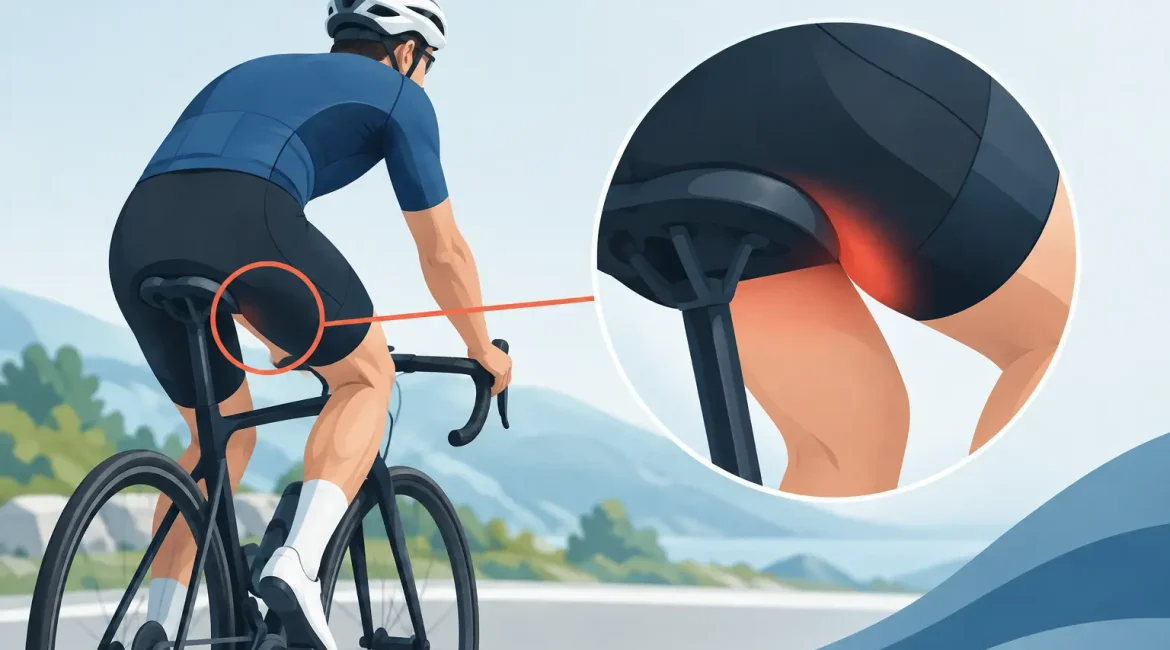
Perché i ciclisti soffrono di sfregamento?

Perché i ciclisti soffrono di sfregamento?

Dopo tre ore di pedalata, anche un punto caldo grande quanto una moneta può trasformarsi in bruciore, pelle irritata e una settimana senza bici. La domanda “why do cyclists get chafing” ha una risposta precisa: lo sfregamento nasce quando pelle, tessuto, umidità e pressione si combinano sotto carico. Non è un fastidio da accettare come normale conseguenza del ciclismo. È un segnale che qualcosa tra corpo, abbigliamento, posizione e sella non sta lavorando bene.

Per il ciclista che accumula chilometri, il problema raramente dipende da una sola causa. Spesso è il risultato di piccoli difetti che si sommano: una cucitura che si muove, fondello compresso, sella troppo alta, bacino instabile o una punta tradizionale che entra in contatto con i tessuti molli a ogni colpo di pedale. Capire il meccanismo è il primo passo per fermare il dolore invece di coprirlo con altra crema.

Perché i ciclisti soffrono di sfregamento in sella

Lo sfregamento è una lesione meccanica della pelle. Durante la pedalata, il bacino dovrebbe rimanere sostenuto dagli ischi, le ossa su cui ci sediamo. Quando invece il peso ricade su perineo, genitali, pieghe inguinali o labbra vulvari, i tessuti molli vengono compressi e trascinati ripetutamente contro sella e pantaloncini.

Ogni pedalata può produrre un micro-movimento. Su un’uscita di 100 chilometri, quei movimenti diventano migliaia. Se la pelle è asciutta e ben protetta può tollerarli a lungo. Se è calda, sudata, già sensibilizzata o sottoposta a pressione eccessiva, la barriera cutanea cede. Arrivano rossore, bruciore, abrasioni e, nei casi trascurati, follicolite, piaghe da sella o infezioni.

La pressione aggrava l’attrito. Un tessuto schiacciato riceve meno flusso sanguigno e diventa più vulnerabile. Per questo chafing, formicolio e intorpidimento spesso compaiono insieme: possono avere manifestazioni diverse, ma condividono una distribuzione del carico sbagliata.

La sella può creare o eliminare il problema

Molti ciclisti reagiscono allo sfregamento cercando pantaloncini più costosi o applicando quantità sempre maggiori di crema anti-sfregamento. Questi strumenti possono aiutare, ma non risolvono una sella che costringe il corpo a cercare continuamente una posizione meno dolorosa.

Una sella stretta nel punto sbagliato, troppo lunga o con una punta alta può interferire con la naturale rotazione del bacino. Il ciclista scivola in avanti, si rialza leggermente a ogni spinta o trasferisce peso sul perineo. Questo movimento aumenta la frizione nelle zone che dovrebbero restare libere da contatto continuo.

Anche il comune canale centrale non è automaticamente una soluzione. Se i bordi del canale sono rigidi, se la larghezza non corrisponde alla distanza degli ischi o se la punta continua a premere contro i tessuti, la pressione viene semplicemente spostata. Una vera sella anatomica deve sostenere le strutture ossee e lasciare spazio alle strutture sensibili, non chiedere al corpo di adattarsi a una forma convenzionale.

Il design Aeroelastic affronta proprio questo punto con una punta bassa e con due appoggi separati e angolati, pensati per sostenere gli ischi e ridurre il contatto con il perineo. Quando il bacino è stabile e i tessuti molli non vengono trascinati sulla punta della sella, la riduzione dell’attrito non è una promessa cosmetica: è una conseguenza della biomeccanica.

Umidità, fondello e calore: il moltiplicatore dell’irritazione

Il sudore non è il nemico, ma cambia drasticamente il comportamento della pelle. L’umidità ammorbidisce lo strato superficiale cutaneo e lo rende più facile da lesionare. Il sale del sudore, poi, può aumentare la sensazione di bruciore. Nelle uscite estive, indoor o ad alta intensità, una zona già sottoposta a pressione diventa rapidamente un ambiente ostile.

Il fondello deve seguire il corpo senza creare pieghe. Un pantaloncino troppo largo si muove e strofina. Uno troppo stretto può comprimere, tirare il tessuto verso l’inguine e limitare la ventilazione. Le cuciture interne, un fondello consumato o un capo lavato con ammorbidente possono peggiorare ulteriormente il quadro. L’ammorbidente lascia residui, riduce la traspirazione e può irritare la pelle sensibile.

Indossare intimo sotto i pantaloncini da ciclismo è un altro errore frequente. Aggiunge un ulteriore strato di tessuto, cuciture e pieghe proprio dove servono superficie liscia e stabilità. Per uscite lunghe, pantaloncini puliti, ben aderenti e senza biancheria intima sono una base non negoziabile.

L’assetto della bici conta quanto la sella

Una sella eccellente può comunque dare problemi se montata male. Un’altezza eccessiva fa oscillare il bacino da un lato all’altro alla ricerca del pedale. Quel dondolio laterale è una macchina da sfregamento: aumenta il contatto alternato tra pelle, fondello e bordo della sella.

Anche l’arretramento e l’inclinazione richiedono attenzione. Una sella troppo inclinata verso l’alto può aumentare la pressione anteriore. Una punta abbassata in modo estremo, invece, può far scivolare il corpo in avanti e scaricare troppo peso su mani, polsi e spalle. L’obiettivo non è inseguire un singolo numero di gradi, ma trovare una posizione in cui gli ischi restano sostenuti, il bacino non scivola e si può pedalare senza contrarsi per proteggere il cavallo.

Manubrio, reach e dislivello sella-manubrio influenzano la rotazione del bacino. Un assetto aggressivo porta più facilmente il corpo in avanti, soprattutto nei ciclisti con mobilità limitata di anche e posteriori della coscia. Per chi pedala a lungo, una regolazione professionale della bici non è un lusso estetico: è una misura di prevenzione per pelle, nervi e salute perineale.

Come ridurre lo sfregamento senza affidarsi alla fortuna

La prima regola è non pedalare sopra un’irritazione aperta. Continuare a sfregare una lesione rallenta la guarigione e aumenta il rischio di infezione. Lavare delicatamente la zona dopo l’uscita, asciugarla bene e lasciare respirare la pelle sono gesti semplici ma efficaci. Se compaiono secrezioni, noduli profondi, febbre, dolore importante o una lesione che non migliora, serve una valutazione medica.

Per la prevenzione quotidiana, usa una crema anti-sfregamento in uno strato sottile sulle aree realmente soggette a contatto. Non è necessario applicarla ovunque, né usarla per mascherare una sella inadatta. Scegli pantaloncini con fondello integro, cambiali subito dopo l’uscita e lavali dopo ogni utilizzo. Il fondello sporco trattiene batteri, sudore e residui oleosi proprio contro la pelle.

Poi osserva il tuo corpo mentre pedali. Ti sposti spesso sulla sella? Ti sollevi per alleviare il perineo? Avverti un lato più irritato dell’altro? Questi non sono dettagli casuali. Possono indicare altezza sella errata, asimmetrie nell’appoggio, tacchette da regolare o una superficie di seduta che non rispetta la tua anatomia.

Non confondere adattamento con danno

Un breve periodo di adattamento a una nuova sella può essere normale, soprattutto se cambia la distribuzione del carico sugli ischi. Ma intorpidimento, bruciore, abrasioni e dolore persistente non sono il prezzo da pagare per diventare più forti. Il corpo non si adatta bene alla pressione cronica sui tessuti molli: spesso compensa irrigidendosi, modificando la pedalata e peggiorando l’efficienza.

La buona notizia è che lo sfregamento è quasi sempre modificabile. Riduci l’umidità, elimina le cuciture e gli indumenti che si muovono, controlla l’assetto e pretendi dalla sella un sostegno anatomico reale. Una lunga uscita dovrebbe mettere alla prova gambe, cuore e testa, non lasciare il perineo a pagare il conto.

Leave a Reply

Your email address will not be published. Required fields are marked *

Privacy Preference Center

Cookies

We believe in being clear and open about how we collect and use data related to you. In the spirit of transparency, this policy provides detailed information about how and when we use cookies. This cookie policy applies to any our page that links to this policy or incorporates it by reference.

Does our site use cookies?
Yes. We use cookies and other technologies to ensure everyone who uses our site has the best possible experience. Cookies also help us keep your account safe. By continuing to visit or use our pages, you are agreeing to the use of cookies and similar technologies for the purposes we describe in this policy.

What is a cookie?
A cookie is a small file placed onto your device that enables our site features and functionality. For example, cookies enable us to identify your device, secure your access to our site and our sites generally, and even help us know if someone attempts to access your account from a different device. Cookies also enable you to easily share content on our site and help us serve relevant ads to you.

When does our site place cookies?
We use cookies on our site. Any browser visiting these sites will receive cookies from us. We also place cookies in your browser when you visit non-our site sites that host our plugins (for example, our site's "Share" button) or tags.

What types of cookies does our site use?
We use two types: persistent cookies and session cookies. A persistent cookie helps us recognize you as an existing user, so it's easier to return to our site or interact with our services without signing in again. After you sign in, a persistent cookie stays in your browser and will be read by our site when you return to one of our sites or a partner site that uses our services (for example, our sharing or job application buttons). Session cookies only last for as long as the session (usually the current visit to a website or a browser session).

What are cookies used for?
Cookies can be used to recognize you when you visit our site, remember your preferences, and give you a personalized experience that's in line with your settings. Cookies also make your interactions with our site faster and more secure. Additionally, cookies allow us to bring you advertising both on and off the our site sites, and bring customized features to you through our site plugins such as our "Share" button.
Authentication
If you're signed in to our site, cookies help us show you the right information and personalize your experience.
Security
We use cookies to enable and support our security features, and to help us detect malicious activity and violations of our User Agreement.
Preferences, features and services
Cookies can tell us which language you prefer and what your communications preferences are. They can help you fill out forms on our site more easily. They also provide you with features, insights, and customized content in conjunction with our plugins.
Advertising
We may use cookies to show you relevant advertising both on and off the our site site. We may also use a cookie to learn whether someone who saw an ad on our site later visited and took an action on the advertiser's site. Similarly, our partners may use a cookie to determine whether we've shown an ad and how it performed, or provide us with information about how you interact with ads. We may also work with a partner to show you an ad on or off our site, such as after you've visited a partner's site or application.
Performance, Analytics and Research
Cookies help us learn how well our site and plugins perform in different locations. We also use cookies to understand, improve, and research products, features, and services, including when you access our site from other websites, applications, or devices such as your work computer or your mobile device.

What is Do Not Track (DNT)?
DNT is a concept that has been promoted by regulatory agencies such as the U.S. Federal Trade Commission (FTC), for the Internet industry to develop and implement a mechanism for allowing Internet users to control the tracking of their online activities across websites by using browser settings. The World Wide Web Consortium (W3C) has been working with industry groups, Internet browsers, technology companies, and regulators to develop a DNT technology standard. While some progress has been made, it has been slow. No standard has been adopted to this date. As such, our site does not use "do not track" signals.

How are cookies used for advertising purposes?
Cookies and other ad technology such as beacons, pixels, and tags help us serve relevant ads to you more effectively. They also help us provide aggregated auditing, research, and reporting for advertisers, understand and improve our service, and know when content has been shown to you. Note: Because your web browser may request advertisements and beacons directly from ad network servers, these networks can view, edit, or set their own cookies, just as if you had requested a web page from their site.
If you are a our site member but logged out of your account on a browser, our site may still continue to log your interaction with our services on that browser for up to 30 days in order to generate usage analytics for our services, which analytics we may share in aggregate form with our advertising customers.
Unless you clear these cookies from your browser, we may use this information to:
provide more relevant, interest-based advertising
provide aggregate reports of ads activity to advertisers and websites hosting the ads
help website and app owners understand how visitors engage with their sites or apps
detect and defend against fraud and other risks to protect users and partners
improve our products
We do not provide any personal information that we collect to advertisers. You can opt-out of off-site and third-party-informed advertising by adjusting your settings. Please note that opting out will not remove advertising from the pages you visit; it will mean that the ads you see may not be matched to your interests. If you are not a our site member, learn more about cookies and how to opt out. Click here to learn more about the self-regulatory principles we adhere to.

What third-party cookies does our site use?
Our cookie table lists some of the third party cookies on our sites. Please note that the names of cookies, pixels and other technologies may change over time.

Controlling cookies
Most browsers allow you to control cookies through their settings preferences. However, if you limit the ability of websites to set cookies, you may worsen your overall user experience, since it will no longer be personalized to you. It may also stop you from saving customized settings like login information.

What to do if you don't want cookies to be set or want them to be removed?
If you don't want us to use cookies when you visit our site, you can opt-out of some cookies on your settings page. In order for us to recognize that you have opted out of cookies, we have to place our our site opt-out cookie on your device so we can know not to set other our site cookies the next time you visit. If you do not want to receive cookies, you can also change your browser settings on your computer or other device you're using to access our services. If you use our site without changing your browser settings, we'll assume that you're happy to receive all cookies on the our site website. Most browsers also provide functionality that lets you review and erase cookies, including our site cookies. Please note that the our site site will not work properly without cookies.
To find out more about cookies, including how to see what cookies have been set and how to manage and delete them, visit wikipedia.org, www.allaboutcookies.org, or www.aboutcookies.org.