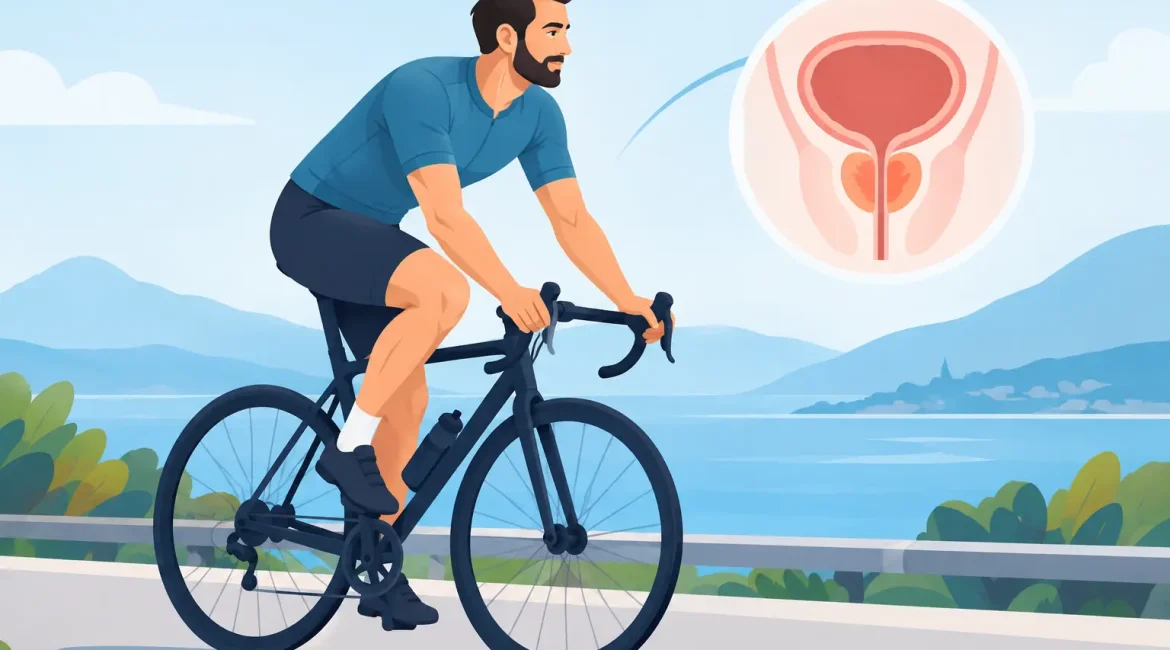
Posso pedalare con prostatite senza peggiorarla?

Posso pedalare con prostatite senza peggiorarla?

La domanda non è solo “posso pedalare con prostatite?”, ma quale tipo di prostatite hai, in quale fase ti trovi e che pressione stai imponendo al perineo a ogni chilometro. Se il dolore compare o aumenta dopo la bici, non è un dettaglio da sopportare: è un segnale biomeccanico da prendere sul serio.

La sella tradizionale concentra spesso carico, sfregamento e vibrazioni nella zona che dovrebbe restare libera di muoversi e ben irrorata. Per un ciclista con infiammazione prostatica, dolore pelvico o sintomi urinari, continuare a pedalare con lo stesso assetto può trasformare un’uscita rigenerante in un fattore irritativo ripetuto.

Pedalare con prostatite: quando è meglio fermarsi

Durante una prostatite acuta, soprattutto se batterica, la priorità non è salvare il programma di allenamento. È favorire la guarigione. Febbre, brividi, dolore importante tra scroto e ano, bruciore urinario intenso, difficoltà a urinare o malessere generale richiedono una valutazione medica tempestiva. In questa fase, evitare la bici è una scelta prudente: la pressione diretta sul perineo e le sollecitazioni prolungate possono aggravare il dolore e rendere più difficile capire se la terapia sta funzionando.

Anche senza febbre, sospendi temporaneamente le uscite se avverti un netto peggioramento dei sintomi dopo aver pedalato, intorpidimento genitale, dolore che persiste il giorno successivo o fastidio crescente da seduto. Non esiste un numero universale di giorni di stop. Il rientro dipende dalla diagnosi, dalla risposta alle cure e dal parere del medico o dell’urologo che ti segue.

La situazione è spesso più sfumata nelle forme croniche, nella sindrome del dolore pelvico cronico o nei disturbi non batterici. Alcuni ciclisti tollerano pedalate brevi e leggere; altri scoprono che persino mezz’ora su una sella convenzionale scatena tensione pelvica e dolore. Qui non serve ostinazione. Serve identificare il carico che il tuo corpo tollera e rimuovere il fattore meccanico che lo supera.

Perché una sella normale può irritare il perineo

Il perineo non è progettato per sostenere il peso del corpo. In posizione seduta, il carico dovrebbe essere distribuito soprattutto sulle tuberosità ischiatiche, le ossa del bacino comunemente chiamate ossa ischiatiche. Eppure molte selle, specialmente quelle strette con naso alto e lungo, spostano una parte significativa della pressione in avanti, proprio sui tessuti molli.

Questo può significare compressione locale, frizione durante la pedalata, calore, sudore e riduzione del comfort. Quando i sintomi prostatici o pelvici sono già presenti, la soglia di tolleranza si abbassa. Una sella che prima sembrava solo scomoda può diventare un punto di irritazione costante.

Il problema non è risolto automaticamente da un foro centrale. Un’apertura può ridurre la pressione in una zona, ma se i bordi della sella comprimono i tessuti, se il naso resta invasivo o se il bacino ruota troppo in avanti, il disagio può continuare. Nemmeno una sella molto imbottita è una garanzia: un’imbottitura eccessivamente morbida può far affondare i tessuti e aumentare l’area di contatto indesiderata.

Come riprendere a pedalare senza ignorare i segnali

Dopo il via libera clinico e quando i sintomi sono stabili, riprendi con uscite facili, brevi e su terreno regolare. L’obiettivo iniziale non è verificare quanto riesci a resistere. È capire come risponde il corpo durante la pedalata, nelle ore successive e il mattino dopo.

Mantieni un’intensità conversazionale ed evita, almeno all’inizio, salite lunghe, lavori ad alta potenza e sessioni in cui resti molto tempo seduto e inclinato in avanti. La posizione aggressiva da strada o triathlon tende ad aumentare il carico anteriore sul bacino. Se compare dolore, non compensare irrigidendo spalle, addome e pavimento pelvico: fermati, scendi dalla bici e valuta l’assetto.

Una ripresa sensata può prevedere 20-30 minuti, poi un aumento graduale solo se non emergono sintomi. Il dolore non è un indicatore di adattamento da allenare. Nel contesto della prostatite, è un limite da rispettare.

Controlla altezza, arretramento e inclinazione

Un’altezza sella eccessiva fa oscillare il bacino da un lato all’altro, creando sfregamento e instabilità. Una sella troppo avanzata o con il naso rivolto verso l’alto può spingere ulteriormente il corpo contro il perineo. Piccole regolazioni possono produrre una differenza concreta, ma devono essere ragionate.

Inclinare la punta leggermente verso il basso può alleggerire la pressione anteriore, ma un’inclinazione eccessiva ti farà scivolare in avanti. A quel punto caricherai mani, spalle e braccia, mentre il bacino continuerà a cercare una posizione stabile. La soluzione non è inseguire il comfort con regolazioni casuali: è creare un appoggio reale sulle ossa ischiatiche.

Riduci pressione, non solo il tempo in sella

Alzarti periodicamente sui pedali aiuta a interrompere la compressione continua, specialmente su percorsi lunghi. Ma non deve diventare il rimedio a una sella sbagliata. Se hai bisogno di sollevarti ogni pochi minuti per sopportare il fastidio, il problema di fondo resta lì.

Anche pantaloncini puliti e ben aderenti, una buona igiene dopo l’uscita e una gestione attenta di sudore e sfregamento possono ridurre l’irritazione cutanea. Tuttavia, nessuna crema o fondello elimina una pressione anatomica mal distribuita. Prima viene l’appoggio; poi vengono gli accessori.

La sella giusta per chi ha dolore prostatico o pelvico

Per un ciclista con prostatite, la sella va valutata come componente sanitario e prestazionale, non come un dettaglio estetico. Cerca una struttura che separi il sostegno delle ossa ischiatiche dalla zona perineale, con una punta bassa che non interferisca con i tessuti molli e superfici che limitino lo sfregamento durante la pedalata.

Conta anche la larghezza utile. Una sella stretta per tradizione non è necessariamente corretta per il tuo bacino. Se le tuberosità ischiatiche non sono sostenute, il corpo tende a cercare stabilità sui tessuti centrali. È esattamente il compromesso da evitare quando vuoi proteggere la zona prostatica.

L’AE Saddle di Aeroelastic nasce da questo principio: due pad separati e angolati sostengono le ossa ischiatiche, mentre il naso basso lascia più spazio al perineo. La schiuma in poliuretano ad alto ritorno elastico evita l’effetto “poltrona” e punta a mantenere un supporto stabile anche nelle uscite lunghe. Non sostituisce una diagnosi né una terapia, ma affronta una causa concreta di disagio che molte selle convenzionali ignorano: pressione e attrito dove non dovrebbero esserci.

Quando chiedere aiuto prima di tornare in bici

Non attribuire automaticamente ogni fastidio alla prostata o alla sella. Il dolore pelvico può avere origini differenti: infezioni, tensione del pavimento pelvico, irritazione nervosa, problemi muscolari o condizioni urologiche che richiedono valutazioni specifiche. Un urologo può chiarire la diagnosi; un professionista esperto in fisioterapia del pavimento pelvico può essere utile quando prevalgono contrattura, dolore persistente o difficoltà a rilassare la muscolatura.

Cerca assistenza medica senza rimandare se hai febbre, sangue nelle urine o nello sperma, incapacità di urinare, dolore intenso o un peggioramento rapido. E se i sintomi si ripresentano sistematicamente dopo ogni uscita, porta questo dato alla visita: durata, intensità, tipo di percorso e posizione in sella aiutano a individuare il problema.

Pedalare può restare parte della tua vita anche dopo una prostatite, ma non deve essere una prova di resistenza al dolore. La bici dovrebbe sostenere la salute, non chiederti di sacrificare il perineo per continuare ad allenarti.

Leave a Reply

Your email address will not be published. Required fields are marked *

Privacy Preference Center

Cookies

We believe in being clear and open about how we collect and use data related to you. In the spirit of transparency, this policy provides detailed information about how and when we use cookies. This cookie policy applies to any our page that links to this policy or incorporates it by reference.

Does our site use cookies?
Yes. We use cookies and other technologies to ensure everyone who uses our site has the best possible experience. Cookies also help us keep your account safe. By continuing to visit or use our pages, you are agreeing to the use of cookies and similar technologies for the purposes we describe in this policy.

What is a cookie?
A cookie is a small file placed onto your device that enables our site features and functionality. For example, cookies enable us to identify your device, secure your access to our site and our sites generally, and even help us know if someone attempts to access your account from a different device. Cookies also enable you to easily share content on our site and help us serve relevant ads to you.

When does our site place cookies?
We use cookies on our site. Any browser visiting these sites will receive cookies from us. We also place cookies in your browser when you visit non-our site sites that host our plugins (for example, our site's "Share" button) or tags.

What types of cookies does our site use?
We use two types: persistent cookies and session cookies. A persistent cookie helps us recognize you as an existing user, so it's easier to return to our site or interact with our services without signing in again. After you sign in, a persistent cookie stays in your browser and will be read by our site when you return to one of our sites or a partner site that uses our services (for example, our sharing or job application buttons). Session cookies only last for as long as the session (usually the current visit to a website or a browser session).

What are cookies used for?
Cookies can be used to recognize you when you visit our site, remember your preferences, and give you a personalized experience that's in line with your settings. Cookies also make your interactions with our site faster and more secure. Additionally, cookies allow us to bring you advertising both on and off the our site sites, and bring customized features to you through our site plugins such as our "Share" button.
Authentication
If you're signed in to our site, cookies help us show you the right information and personalize your experience.
Security
We use cookies to enable and support our security features, and to help us detect malicious activity and violations of our User Agreement.
Preferences, features and services
Cookies can tell us which language you prefer and what your communications preferences are. They can help you fill out forms on our site more easily. They also provide you with features, insights, and customized content in conjunction with our plugins.
Advertising
We may use cookies to show you relevant advertising both on and off the our site site. We may also use a cookie to learn whether someone who saw an ad on our site later visited and took an action on the advertiser's site. Similarly, our partners may use a cookie to determine whether we've shown an ad and how it performed, or provide us with information about how you interact with ads. We may also work with a partner to show you an ad on or off our site, such as after you've visited a partner's site or application.
Performance, Analytics and Research
Cookies help us learn how well our site and plugins perform in different locations. We also use cookies to understand, improve, and research products, features, and services, including when you access our site from other websites, applications, or devices such as your work computer or your mobile device.

What is Do Not Track (DNT)?
DNT is a concept that has been promoted by regulatory agencies such as the U.S. Federal Trade Commission (FTC), for the Internet industry to develop and implement a mechanism for allowing Internet users to control the tracking of their online activities across websites by using browser settings. The World Wide Web Consortium (W3C) has been working with industry groups, Internet browsers, technology companies, and regulators to develop a DNT technology standard. While some progress has been made, it has been slow. No standard has been adopted to this date. As such, our site does not use "do not track" signals.

How are cookies used for advertising purposes?
Cookies and other ad technology such as beacons, pixels, and tags help us serve relevant ads to you more effectively. They also help us provide aggregated auditing, research, and reporting for advertisers, understand and improve our service, and know when content has been shown to you. Note: Because your web browser may request advertisements and beacons directly from ad network servers, these networks can view, edit, or set their own cookies, just as if you had requested a web page from their site.
If you are a our site member but logged out of your account on a browser, our site may still continue to log your interaction with our services on that browser for up to 30 days in order to generate usage analytics for our services, which analytics we may share in aggregate form with our advertising customers.
Unless you clear these cookies from your browser, we may use this information to:
provide more relevant, interest-based advertising
provide aggregate reports of ads activity to advertisers and websites hosting the ads
help website and app owners understand how visitors engage with their sites or apps
detect and defend against fraud and other risks to protect users and partners
improve our products
We do not provide any personal information that we collect to advertisers. You can opt-out of off-site and third-party-informed advertising by adjusting your settings. Please note that opting out will not remove advertising from the pages you visit; it will mean that the ads you see may not be matched to your interests. If you are not a our site member, learn more about cookies and how to opt out. Click here to learn more about the self-regulatory principles we adhere to.

What third-party cookies does our site use?
Our cookie table lists some of the third party cookies on our sites. Please note that the names of cookies, pixels and other technologies may change over time.

Controlling cookies
Most browsers allow you to control cookies through their settings preferences. However, if you limit the ability of websites to set cookies, you may worsen your overall user experience, since it will no longer be personalized to you. It may also stop you from saving customized settings like login information.

What to do if you don't want cookies to be set or want them to be removed?
If you don't want us to use cookies when you visit our site, you can opt-out of some cookies on your settings page. In order for us to recognize that you have opted out of cookies, we have to place our our site opt-out cookie on your device so we can know not to set other our site cookies the next time you visit. If you do not want to receive cookies, you can also change your browser settings on your computer or other device you're using to access our services. If you use our site without changing your browser settings, we'll assume that you're happy to receive all cookies on the our site website. Most browsers also provide functionality that lets you review and erase cookies, including our site cookies. Please note that the our site site will not work properly without cookies.
To find out more about cookies, including how to see what cookies have been set and how to manage and delete them, visit wikipedia.org, www.allaboutcookies.org, or www.aboutcookies.org.