
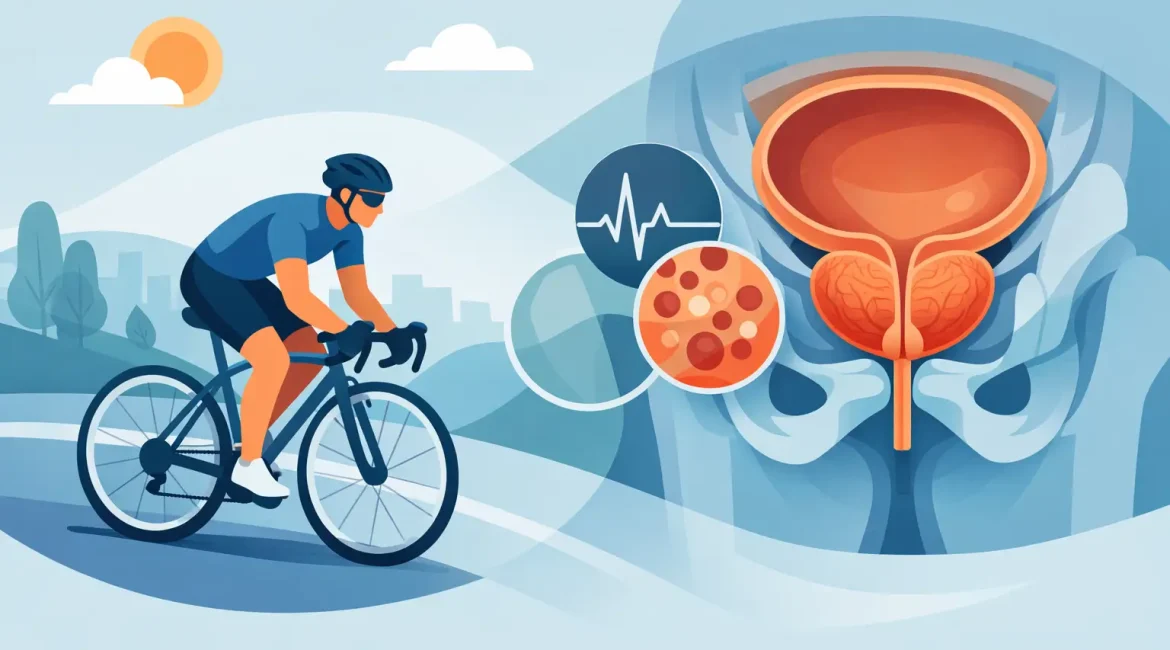
A long ride should leave your legs tired, not your pelvic floor irritated. Yet many riders ask, does cycling affect prostate health when they start noticing numbness, deep perineal ache, urinary irritation, or pressure that lingers after the bike is back in the garage. The honest answer is nuanced. Cycling itself is not generally considered a cause of prostate disease, but poor saddle pressure can aggravate the tissues around the prostate, compress nerves and blood vessels, and make an existing problem feel much worse.
That distinction matters. Too many cyclists are told to either stop riding or simply toughen up. Neither response solves the real issue. The key question is not whether bicycles are inherently bad. It is whether your contact points, riding position, saddle shape, and time under load are repeatedly crushing a sensitive anatomical area that was never meant to carry that kind of pressure.
Does cycling affect prostate symptoms or just saddle comfort?
For many men, the concern is less about the prostate as an organ and more about what sits around it. The perineum is the soft tissue between the sit bones and the genitals. It contains nerves, blood vessels, connective tissue, and structures close to the prostate and pelvic floor. When a traditional narrow-nosed saddle concentrates bodyweight into that area, the result can be numbness, burning, tingling, or a bruised feeling that riders often describe as prostate pain.
Sometimes that sensation is truly linked to the prostate, especially in riders who already have prostatitis, pelvic floor dysfunction, or age-related enlargement. Sometimes it is pressure on the pudendal nerve or surrounding soft tissues, which can mimic prostate discomfort. From the saddle, those distinctions do not always feel obvious. What matters is that the load is in the wrong place.
Research on cycling and prostate cancer has not shown a clear, consistent causal link. That is the part many riders find reassuring. But reassurance should not be confused with permission to ignore pain. A saddle can still create significant perineal stress without causing cancer. If you finish rides with numbness or pressure, your setup is failing your anatomy.
Why some cyclists feel prostate pressure on the bike
The problem usually starts with load distribution. A conventional saddle often asks soft tissue to do the job of bone. Instead of supporting the rider on the ischial tuberosities, or sit bones, it funnels pressure into the centreline. Add a low front end, long hours, and a static riding posture, and the perineum gets compressed over and over again.
That compression can reduce blood flow and irritate nerves. It can also increase tension through the pelvic floor, which may contribute to urinary urgency, aching after rides, and a sense of pelvic heaviness. Riders with an enlarged prostate or a history of prostatitis may be even more sensitive because the area is already reactive.
Heat, sweat, and friction make it worse. So does staying seated for every climb and every hard effort. The longer the ride, the less forgiving a poor saddle becomes. Endurance cyclists often discover this the hard way because small fit errors that feel manageable for an hour become a genuine health problem after three or four.
The common triggers
The usual culprits are a narrow or high-nosed saddle, saddle tilt that pushes the rider into the front, excessive reach to the bars, poor sit-bone support, and shorts that do not stabilise the contact area well. None of these issues sound dramatic in isolation. Together, they can create sustained pressure exactly where riders least need it.
When to take symptoms seriously
A bit of muscle soreness after a long ride is normal. Numbness in the genitals or persistent perineal pain is not. If discomfort lasts beyond the ride, keeps returning, or is accompanied by urinary symptoms, it deserves attention.
Warning signs include burning or aching between the legs, tingling, genital numbness, discomfort when sitting off the bike, urinary hesitancy, increased urgency, or a feeling of pressure deep in the pelvis. Blood in the urine, fever, severe pain, or symptoms that continue despite time off the bike should be assessed by a clinician. Cycling may be the trigger, but it is not always the whole story.
This is where many riders lose months. They swap creams, adjust shorts, and keep riding through it. If the underlying issue is concentrated saddle pressure, those small fixes rarely solve it. If the prostate or pelvic floor is already inflamed, continuing to load the area can keep the cycle going.
Does cycling affect prostate health more as you get older?
Often, yes. Not because older riders are weak, but because age changes the context. Men over 40 are more likely to have prostate enlargement, pelvic floor tension, reduced tissue tolerance, or previous episodes of prostatitis. Recovery can be slower. A saddle that was merely annoying at 30 may become intolerable at 55.
Older endurance riders also tend to have years of accumulated exposure to poor saddle design. Thousands of miles on a shape that compresses the perineum can turn a minor fit flaw into a recurring problem. That is why health-conscious cyclists should think beyond immediate comfort. Protecting pelvic function is part of protecting long-term performance.
What actually helps
The fix is rarely to stop cycling altogether. The fix is to stop loading the wrong anatomy.
First, the saddle has to support your sit bones instead of your perineum. That sounds obvious, but much of the market still revolves around conventional shapes that prioritise familiarity over pressure relief. Cut-outs can help some riders, but they are not a guaranteed answer. If the saddle platform still collapses weight inward, the cut-out may reduce contact in one spot while leaving the surrounding edges to dig into soft tissue.
Second, nose height matters. A high or intrusive nose can drive pressure directly into the front of the saddle contact area. Lower, less aggressive front geometry reduces that risk, especially in riders who spend hours in an aerodynamic position.
Third, the seat pads need to be separated and angled in a way that follows pelvic structure, not marketing convention. This is where science-backed anatomical design changes the ride. A saddle built around sit-bone width and perineal clearance does more than feel softer. It changes where your body is allowed to rest.
Fourth, foam choice matters. Overly soft padding often feels pleasant for ten minutes and then becomes unstable, letting tissue sink into pressure zones. High-rebound support is different. It cushions impact while holding shape under load.
Aeroelastic was built around this exact problem: reducing perineal pressure, eliminating crotch friction, and moving support back to where the body can tolerate it over distance. For riders dealing with prostate pressure or pelvic discomfort, that design logic is not cosmetic. It is the point.
Bike fit still matters
Even the best saddle can be sabotaged by a poor position. If your bars are too low, your saddle is too high, or your reach is too long, you may keep sliding forwards and loading the nose. Riders often blame the saddle when the bike is effectively pushing them onto it.
A more balanced position can reduce pelvic rotation and relieve the centreline. Small changes in saddle setback, tilt, and handlebar reach can produce a noticeable difference, but this is not a licence to endlessly tinker while ignoring an obviously unsuitable saddle shape. Fit and saddle design have to work together.
Standing briefly during long rides helps restore circulation. So does varying cadence and seated posture. But these are supporting strategies, not primary solutions. If your normal riding position causes numbness, the problem remains unsolved.
The trade-off riders should understand
There is no universal saddle because pelvic anatomy, flexibility, and riding style vary. A saddle that feels stable for aggressive road racing may be too intrusive for a rider managing prostatitis. A heavily padded leisure saddle may reduce road buzz yet worsen central pressure on longer rides. Comfort is not only about softness. It is about pressure placement.
That is why experienced cyclists should be wary of simplistic claims. Cycling does not automatically damage the prostate. Equally, “all saddles are basically the same once you get used to them” is nonsense. The body adapts to many bad inputs, right up until it stops tolerating them.
If you are asking does cycling affect prostate health, your body is probably already giving you data. Listen to it. Numbness is not normal adaptation. Perineal ache is not a rite of passage. Recurrent pressure after every ride is not a training badge.
The most productive mindset is clinical rather than emotional. Identify the pressure source. Reduce central load. Support the sit bones. Check your fit. If symptoms persist, get medical advice rather than guessing.
Cycling should be one of the most sustainable endurance sports you can do. When the saddle respects your anatomy, it usually is. Protect the contact point, and you give yourself a far better chance of keeping the miles, the fitness, and the pleasure of riding for years to come.
