
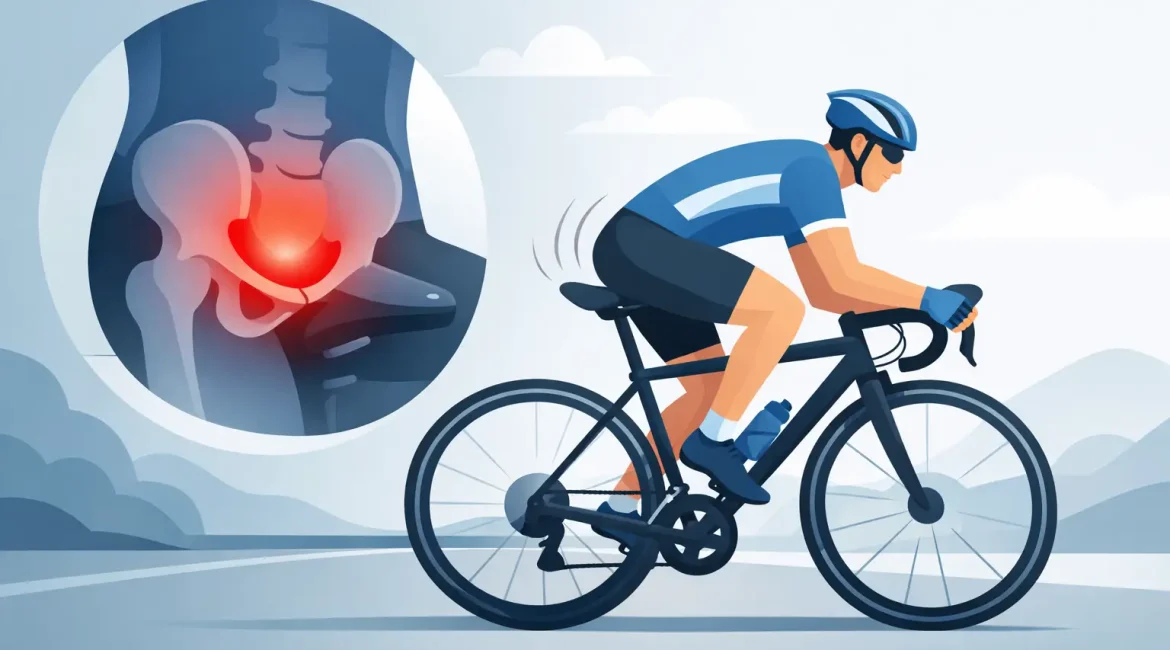
You can have strong legs, a sensible training plan and a well-maintained bike, then still cut a ride short because the pain between the saddle contact points becomes impossible to ignore. If you are asking what causes perineal pain cycling, the answer is rarely just one thing. In most cases, it is the result of repeated pressure, heat, friction and poor load distribution acting on tissue that was never meant to carry your bodyweight for hours at a time.
That matters because perineal pain is not just an annoyance. It can affect power, cadence, posture and confidence on the bike. It can also come with numbness, burning, chafing, urinary discomfort or pressure around the prostate and pelvic floor. Riders often blame themselves, but the real problem is usually mechanical.
What causes perineal pain cycling on the bike?
The perineum is the soft tissue area between the sit bones, containing nerves, blood vessels and pressure-sensitive structures. On a correctly supported rider, the sit bones should take most of the load. When the saddle shape, width, angle or riding position shifts bodyweight forward into the middle, the perineum starts absorbing force it should not be handling.
On shorter rides, that may feel like mild soreness or heat. On longer rides, the same pressure can reduce blood flow, irritate the pudendal nerve and create a familiar mix of pain and numbness. This is why some riders feel fine at 20 minutes, then progressively worse at 90.
Traditional saddle design is a major part of the problem. A long, raised nose and a narrow central platform often place the highest contact pressure directly under soft tissue. Even when a saddle is sold as performance-oriented, that does not mean it is anatomically supportive. Fast does not automatically mean healthy.
Pressure is the main culprit
The most common cause of perineal pain is sustained compression. Your body mass presses down, your pelvis rotates forward, and a standard saddle concentrates that load into a narrow contact zone. The more aggressive the riding position, the more likely that pressure shifts away from bone and into the perineum.
Road cyclists and triathletes see this often because they spend long periods in a forward-leaning posture. That posture can be efficient aerodynamically, but it changes pelvic mechanics. As the pelvis rolls forward, the contact point moves from the wider rear support area towards the nose and centre of the saddle.
This is also why simply adding more padding does not always solve the issue. Soft foam can feel pleasant at first, then collapse under load and let the rider sink deeper into a pressure hotspot. The question is not whether the saddle feels soft in the hand. The question is where the load goes when you are actually pedalling.
Nerve and blood vessel irritation
When the perineum is compressed, nerves and blood vessels can be affected at the same time. That can produce tingling, numbness, sharp discomfort or a heavy, bruised sensation after the ride. Some riders dismiss numbness because it is not technically painful in the moment. That is a mistake. Numbness is usually a sign that tissue is under too much pressure.
If symptoms persist beyond the ride, saddle mechanics need attention. Repeated nerve irritation is not something to train through.
Friction is the second half of the problem
A lot of riders focus only on downward pressure, but friction is just as important. Even a moderate pressure point becomes much worse when the skin and soft tissue are rubbing against the saddle every pedal stroke. Heat, sweat, seam movement and slight pelvic instability all magnify that effect.
This is where saddle shape matters again. If the nose is too high, too wide or too intrusive, it can create repeated contact with sensitive tissue. If the saddle surface forces the rider to slide and reposition constantly, that movement increases rubbing. Chamois cream can reduce symptoms, but it does not correct the cause.
For some riders, friction produces more of a burning or raw feeling than a deep ache. For others, friction and pressure occur together, which is why the area can feel both tender and numb at the same time. That combination is common on longer endurance rides.
Bike fit can either protect you or expose you
A poor bike fit does not have to look dramatic to cause a problem. A saddle that is a few millimetres too high can increase side-to-side pelvic rocking. A handlebar drop that is too aggressive can rotate the pelvis forward and overload soft tissue. A saddle nose that tips up slightly can become a constant source of perineal compression.
Small setup errors matter because they are repeated thousands of times per ride. Riders often adapt unconsciously by shifting position, sitting crooked or taking more weight through the hands. Those adjustments may keep you moving, but they usually confirm that the saddle-body interface is wrong.
Saddle width is another overlooked factor. If the rear platform is too narrow for your sit bone width, you will not get stable skeletal support. Instead of being held by bone, you sink inward and load the centre. This is one reason why riders with expensive saddles still experience persistent pain.
The cut-out is not always enough
Many cyclists assume a cut-out saddle solves perineal pain by default. Sometimes it helps. Sometimes it simply moves the pressure to the edges of the cut-out, creating new hotspots. It depends on the width, shape, foam behaviour and how the rider sits on the saddle.
If the overall structure still directs bodyweight into soft tissue, a hole in the middle is not a complete solution. The contact geometry has to support the anatomy, not just remove a strip of material.
Riding style and duration change the risk
The same saddle can feel acceptable on a 45-minute spin and intolerable on a four-hour ride. Duration amplifies every flaw. Pressure accumulates, tissue warms up, swelling increases, and micro-movements turn into genuine irritation.
Cadence and terrain also play a part. Long seated climbs increase sustained loading. Rough roads increase impact and shearing forces. Time trial positions can be especially demanding because the pelvis stays rotated forward for extended periods.
Age and medical history matter too. Riders with pelvic floor tension, prostate sensitivity, previous saddle sores or reduced tissue tolerance may react sooner than others. That does not mean they are unsuited to cycling. It means their equipment needs to be more anatomically exact.
Clothing and hygiene can make it worse
Bib shorts are not the root cause of perineal pain, but poor-quality shorts can intensify it. A chamois that bunches, seams that sit in the wrong place, or fabric that holds too much moisture all increase friction. The same applies to worn-out shorts that no longer support the pelvis consistently.
Hygiene matters because inflamed skin is more vulnerable to rubbing and pressure. If sweat, bacteria and repeated chafing are added to an already overloaded contact area, soreness can escalate quickly. That said, do not let anyone convince you that perineal pain is mainly a shorts problem. In most riders, the saddle and fit remain the primary drivers.
How to tell whether your saddle is the issue
If pain is located in the centre rather than under the sit bones, the saddle is very likely part of the problem. The same applies if symptoms include numbness, tingling, prostate pressure, genital discomfort or the urge to stand up frequently just to get relief.
Another strong clue is when discomfort appears predictably with time in the saddle rather than with muscular fatigue. If your legs feel fine but your perineum starts complaining early, your support mechanics are off. A healthy saddle interface should let bone carry load and soft tissue stay relatively unloaded.
This is where a purpose-built ergonomic design changes the equation. Saddles engineered around perineal relief, separated support zones and a lower nose can reduce both pressure and friction in a way conventional shapes often do not. Aeroelastic was built around exactly that problem: protecting sensitive tissue while preserving control and long-distance riding performance.
What actually helps
Start with the saddle, because that is the contact point causing the issue. Look for a shape that supports the sit bones properly, limits nose intrusion and reduces central compression rather than masking it with extra padding. Then assess saddle height, setback and tilt. Even a strong anatomical saddle can underperform if it is badly positioned.
From there, check whether your bar position is forcing too much forward pelvic rotation, whether your shorts are stable and smooth, and whether symptoms are worse on specific ride types. If the pain is sharp, persistent or associated with urinary or sexual symptoms, speak to a qualified medical professional. Cycling discomfort is common, but persistent perineal symptoms should not be normalised.
Pain in this area is usually a design and setup problem, not a toughness test. When the load goes to the right structures, cycling feels like cycling again – not a countdown to the next wave of numbness.
