
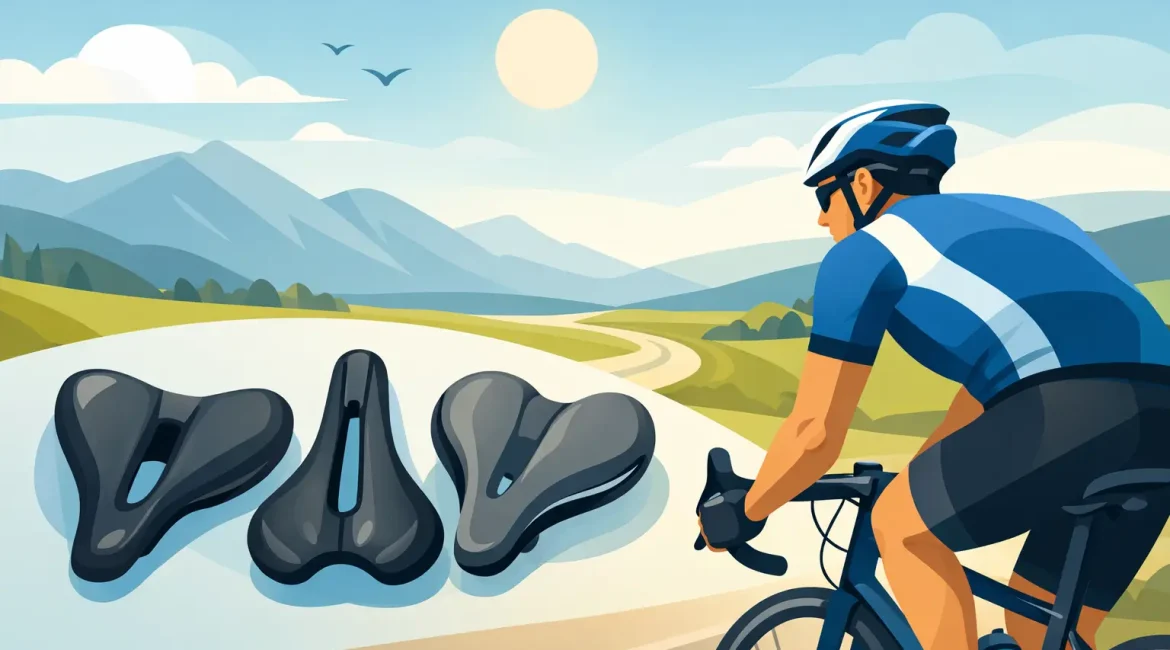
A saddle can feel tolerable for 90 minutes and still be completely wrong for a 160 km day. That is the trap many riders fall into when searching for the best saddle for endurance cycling. The real test is not whether a saddle feels acceptable on the turbo or a short club spin. It is whether it protects soft tissue, controls friction, and supports stable power after hour four, not just hour one.
Endurance cycling exposes every weakness in saddle design. Small pressure points become numbness. Slight rubbing becomes skin breakdown. A shape that seems sporty in the car park can become a genuine barrier to training consistency once the miles add up. If you are dealing with perineal pressure, prostate discomfort, recurring chafing, or a dead feeling through the centreline, the problem is rarely that you need to “get used to it”. More often, your saddle is asking anatomy to adapt to a shape that was never designed around it.
What makes the best saddle for endurance cycling
The best saddle for endurance cycling is not simply the lightest, narrowest, or most fashionable option. It is the one that lets your body carry load through the skeletal structure rather than compressing nerves, blood vessels, and soft tissue between you and the shell.
That means proper support under the sit bones, controlled padding that rebounds instead of collapsing, and a front section that does not create unnecessary pressure when you rotate forwards. It also means the saddle has to remain stable under effort. If you are constantly shifting position to escape discomfort, your pelvis is not supported correctly and your power transfer usually suffers with it.
Traditional saddles often fail endurance riders for a simple reason. They keep a long, rising nose and a central platform that assumes contact through the middle is acceptable. For short rides, some cyclists tolerate that. Over long distances, the cost becomes obvious. Persistent compression in the perineal area can contribute to numbness, burning, swelling, and for some riders, concern about prostate irritation or pelvic floor stress.
Why traditional saddle advice often falls short
A lot of mainstream saddle advice still revolves around trial and error with minor variations of the same basic shape. Wider, narrower, more cut-out, less cut-out, firmer, softer. Those factors matter, but they do not solve the underlying issue if the saddle still directs force into the wrong tissues.
Cut-outs can help, but they are not a guaranteed answer. On some saddles, the edges of the cut-out become new pressure points. Noseless designs can reduce front pressure, but some riders find them unstable for road positioning and long seated efforts. Very soft saddles may feel kind at first touch, yet excessive compression can increase friction and allow the pelvis to sink into awkward angles.
This is why the best results usually come from anatomical design rather than cosmetic variation. A saddle should account for pelvic rotation, sit-bone spacing, and the fact that endurance riders spend long periods in a relatively fixed position. If the design only looks ergonomic but still loads the centreline, it is not solving the right problem.
Pressure relief matters more than plushness
Many cyclists assume more padding equals more comfort. On long rides, that is often backwards. Plush foam can feel pleasant for the first few kilometres, but once it deforms under bodyweight, it tends to spread pressure and increase movement. More movement means more friction. More friction means more heat, more skin irritation, and a higher chance of saddle sores.
A better approach is targeted support with resilient material. High-rebound foam can absorb road buzz while still keeping the pelvis stable. The goal is not to sit in the saddle. The goal is to sit on it, with bodyweight carried by bony structures rather than soft tissue.
For endurance riders, that distinction is critical. You do not need a sofa. You need a platform that stays supportive after several hours, even when sweat, fatigue, and repeated seated efforts begin to magnify every flaw.
The shape that usually works best over distance
If you are trying to identify the best saddle for endurance cycling, start with shape before brand names. The most effective endurance saddles tend to share a few traits. They offer clear sit-bone support, a relief zone that genuinely unloads the perineum, and a front profile that reduces crotch friction rather than creating it.
A lower nose can make a major difference, especially for riders who spend time in a forward-rotated road position. When the nose sits too high or remains too bulky, it tends to push into the soft tissue at the front of the saddle. That is where many numbness complaints begin.
Separated or angled seat pads are another strong sign of a more anatomical approach. Instead of one continuous surface compressing the centre, they allow load to be directed laterally under the sit bones. Done properly, this reduces pressure where it matters most while improving stability. That combination is far more valuable on a six-hour ride than a few extra millimetres of generic cushioning.
Fit still matters – even the right saddle can be set up badly
A well-designed saddle can still disappoint if the width or position is wrong. Sit-bone width matters because the support points need to match your anatomy. If the saddle is too narrow, the pelvis rolls inward and soft tissue takes the load. If it is too wide, you may get inner-thigh interference and excess rubbing.
Tilt is equally important. Many riders point the nose down too far in an attempt to escape pressure, only to slide forwards and overload the hands, shoulders, and knees. Others keep the nose too high and wonder why numbness persists. Small changes matter here. Even a one-degree adjustment can transform how pressure is distributed.
Fore-aft position also affects comfort. Move a saddle too far forwards and you may increase front-end pressure. Too far back and you can overload the rear while compromising pedalling mechanics. Endurance comfort is never only about the saddle itself. It is about how the saddle interacts with your posture, bar height, cleat position, and pelvic control.
Who should be especially careful about saddle choice
Any endurance cyclist benefits from a proper anatomical saddle, but some riders have less margin for error. If you have prostate sensitivity, recurring numbness, pelvic floor discomfort, or a history of saddle sores, standard designs are more likely to become a health issue rather than a mere annoyance.
Middle-aged and older cyclists often notice this first because tissue tolerance changes and recovery becomes less forgiving. Riders training for sportives, audax events, triathlon, or long weekend road miles are also at higher risk simply because exposure time is longer. Female riders can experience many of the same problems, although pressure patterns vary and width needs may differ.
The key point is simple. Pain is not a badge of commitment. Repeated compression and friction are warnings, and the best endurance setup is the one that removes the cause rather than asking you to endure it.
What to look for before you buy
Ignore marketing language about racing heritage if the shape does not support your anatomy. Instead, assess whether the saddle is clearly built to reduce perineal loading, control friction, and support the sit bones in a sustained riding position.
Look carefully at the nose profile. A lower, less intrusive nose is often a better choice for long-distance comfort. Check whether the central area truly relieves pressure or simply appears open. Consider foam behaviour, not just thickness. Think about whether the width reflects actual sit-bone support rather than a generic road saddle template.
This is where a science-led design stands apart. A saddle such as the AE Saddle is built around the principle that long-ride comfort starts with anatomy, not convention. Low nose geometry, separated angled pads, and pressure relief through the centre are not styling details. They are direct responses to the mechanical causes of numbness, friction, and prostate pressure.
The best saddle is the one that lets you forget about it
The best saddle for endurance cycling does not announce itself with softness in the first five minutes. It proves itself quietly over distance. You stop shuffling. You stop standing up just to get relief. You stop finishing rides with numbness, burning, or the feeling that your body has been fighting the bike all day.
That kind of comfort is not indulgent. It protects consistency. When saddle pressure is reduced, riders can hold position better, recover better, and train without carrying irritation into the next session. For many cyclists, solving saddle pain is not about luxury. It is the difference between riding as planned and cutting rides short.
If your current saddle leaves you sore, numb, or worried about long-term pelvic health, trust the signal. The right endurance saddle should support your performance by removing unnecessary pressure from the equation. Once that happens, the road gets longer in the best possible way.
