
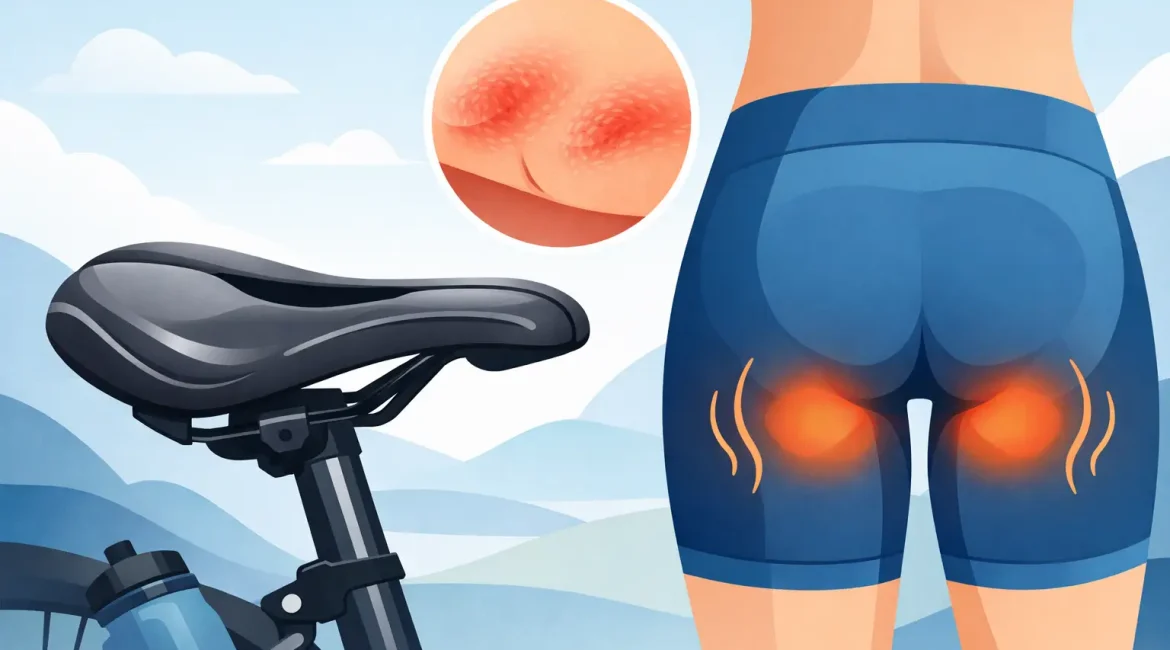
Chafing rarely starts as a dramatic problem. More often, it begins as a hot spot 40 minutes into a ride, then turns into burning skin, numbness, and the kind of discomfort that changes how you pedal. If you are searching for a bike saddle to prevent chafing, the real issue is not only surface rubbing. It is pressure, tissue compression, saddle shape, and the way your body is forced to sit hour after hour.
Many riders assume chafing means they simply need thicker shorts or more cream. Sometimes that helps. Often, it does not. When the saddle is wrong, no amount of fabric technology can fully compensate for a design that traps soft tissue, overloads the perineum, or creates constant inner-thigh contact. That is why the best solution starts with saddle anatomy, not accessories.
What a bike saddle to prevent chafing actually needs to do
A good saddle does not merely feel soft in the car park. It has to manage load correctly once you are riding at speed, rotating your pelvis, and staying seated for prolonged periods. To prevent chafing, a saddle must reduce friction at its source. That means stabilising your position so you are not sliding around, keeping pressure on the sit bones instead of the perineum, and avoiding excess bulk where the thighs pass the saddle nose.
This is where many conventional saddles fail. Traditional designs often rely on a long, raised nose and a narrow central channel or cut-out. On paper, that sounds like pressure relief. In practice, riders still experience tissue contact along the nose, edge pressure around the cut-out, or a shape that encourages micro-movements with every pedal stroke. Those repeated movements are exactly what turn a manageable ride into an inflamed one.
A true anti-chafing saddle needs to support the skeletal structure and get out of the way of sensitive tissue. That sounds simple, but it requires a more disciplined design approach than most saddles offer.
Why standard saddles cause friction in the first place
Chafing is usually blamed on skin, but the trigger is mechanical. If the nose is too high, too wide, or too intrusive, it rubs the inner thigh and compresses the soft tissue at the front of the pelvis. If the rear platform is too narrow for your sit-bone width, your body starts searching for support. That movement creates rubbing. If the foam is too soft and collapses under load, you sink into the saddle and increase contact area in the worst possible places.
There is also a performance cost. A rider who is protecting sore tissue will shift posture, reduce time in the drops, stand unnecessarily, or tilt the pelvis into a compromised position. Over a long ride, that means less efficient pedalling and more fatigue. Comfort is not separate from performance. For endurance cyclists, it is part of the engine.
This matters even more for riders with prostate sensitivity, pelvic floor irritation, numbness, or recurring saddle sores. In those cases, friction is not just annoying. It is a warning sign that the saddle is loading anatomy it should be protecting.
The design features that matter most
The first feature to look at is nose profile. A lower, less intrusive nose can make a substantial difference because it reduces direct contact with the perineal area and creates more clearance for natural thigh movement. Many riders do not realise how much friction comes from the front of the saddle until they switch to a shape that removes that interference.
The second is pad separation. Saddles that split support into two angled rear pads can carry body weight more directly through the sit bones. That reduces central pressure and helps keep soft tissue from being crushed between rider and saddle shell. It also improves positional stability, which matters because stable contact means less rubbing over time.
Foam density matters as well. Excessively plush saddles often feel comfortable for ten minutes and worse for three hours. High-rebound polyurethane foam is more effective because it cushions without collapsing. You stay supported rather than sinking into a trough of pressure and heat.
Finally, width should be dictated by anatomy, not fashion. A saddle that matches sit-bone spacing gives the pelvis a stable foundation. One that is too narrow pushes load inward into the perineum. One that is too wide may create thigh interference. The right width is rarely the one that simply looks fast.
Is a cut-out enough?
Sometimes, but often not.
Cut-out saddles can reduce central pressure for certain riders, especially on shorter rides or in more upright positions. But a cut-out does not automatically solve friction. If the surrounding structure still presses into soft tissue, or if the nose remains high and prominent, the rider may still experience numbness and chafing. In some cases, the cut-out edges become pressure points themselves.
That is why there is no single feature that guarantees relief. Saddle comfort comes from the whole system: nose height, rear support, foam behaviour, width, and how the saddle interacts with your pedalling motion. Riders who have already tried one or two cut-out models without success are not imagining things. The design may simply not go far enough.
How to choose the best bike saddle to prevent chafing
Start with the symptom pattern. If the problem is burning on the inner thighs, look closely at saddle nose width and height. If the issue is numbness or prostate pressure, prioritise saddles that dramatically reduce central compression rather than those that only add a shallow relief channel. If you slide forwards constantly, your support platform is probably wrong, even if the saddle feels acceptable at first touch.
Then consider your riding style. Road cyclists and triathletes who spend long periods in an aggressive position usually need more precise pressure management than casual riders. The more the pelvis rotates forwards, the less forgiving a conventional saddle becomes. That is why endurance riders often benefit most from anatomically separated support zones and a low-profile front section.
Do not judge by softness alone. On long rides, structural support beats cushion. Soft saddles can increase friction by allowing too much movement and too much tissue compression. Firm but correctly engineered support is often the healthier option.
If you have recurring pelvic discomfort, prostate concerns, or persistent numbness, treat the saddle as a health decision, not just a comfort upgrade. The right design can remove chronic load from vulnerable structures. The wrong one can keep aggravating them, even if your shorts and bike fit are otherwise decent.
Setup still matters
Even the best saddle can disappoint if it is badly adjusted. A nose that is tilted too far up will increase pressure and friction. Too far down, and you may slide forwards, forcing constant repositioning. Saddle height matters as well. If it is too high, the hips rock and the inner thighs rub more. If it is too low, load increases through the seated contact points.
Fore-aft position also changes where your pelvis meets the saddle. Small adjustments can shift pressure away from irritated tissue and onto the bony structures designed to carry it. This is why a technically better saddle should still be paired with careful setup. Comfort gains come from both design and placement.
For riders who have spent years tolerating discomfort, there can also be a brief adaptation period. That is normal if the new saddle is finally supporting the sit bones properly. What is not normal is ongoing numbness, sharp pressure, or skin breakdown. Those signs mean the problem is not solved.
When a different saddle shape changes everything
The biggest breakthrough usually happens when riders stop looking for a padded version of the same old design. If a traditional saddle shape has been causing friction, adding more gel or a slightly bigger cut-out is often a minor tweak to a structural problem. A genuine solution usually comes from a saddle that rethinks where support should sit and where pressure should not.
That is the logic behind anatomy-led saddles such as Aeroelastic, which use a low saddle nose, separated angled seat pads, and resilient foam to reduce crotch friction and offload the perineal zone. The point is not novelty. The point is to stop asking sensitive tissue to tolerate a shape that was never built around it.
If you want a bike saddle to prevent chafing, choose one that protects the body first and follows cycling tradition second. Your skin, nerves, and long-ride performance all depend on that decision.
A good ride should leave your legs tired, not your pelvis damaged. When the saddle supports your anatomy properly, friction stops being something you manage and starts being something you no longer think about.
