
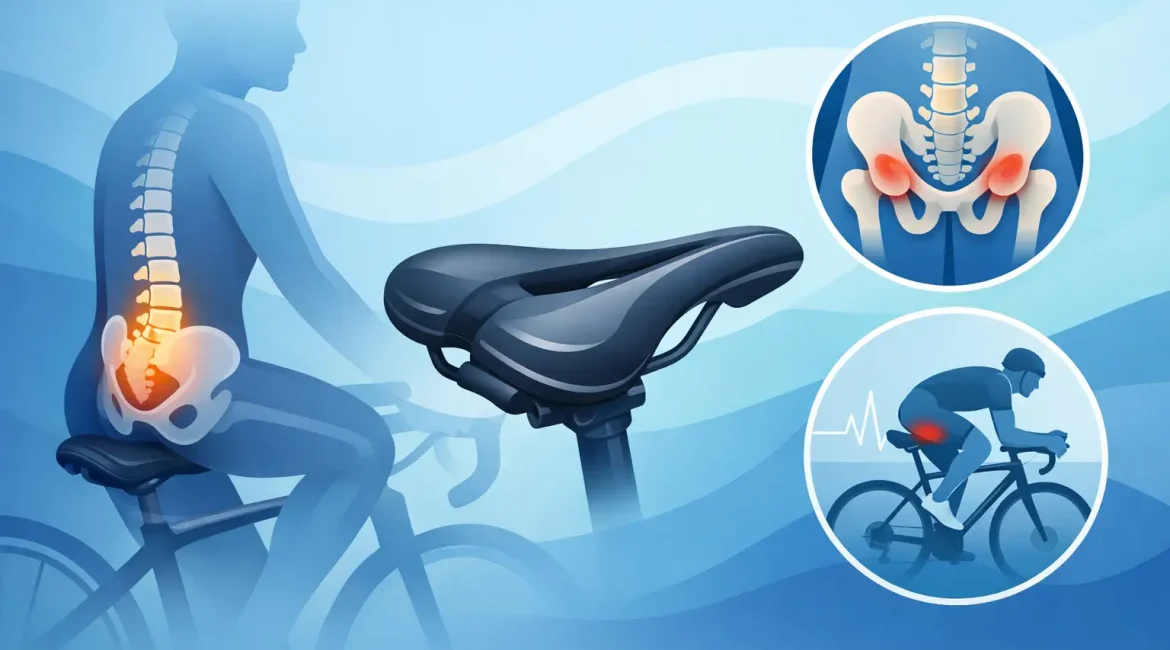
If your ride starts with power and ends with numbness, burning skin, or that dull pressure nobody likes to talk about, your saddle is not a minor detail. The real anatomical bicycle saddle benefits show up where traditional designs fail – in reduced perineal compression, less crotch friction, better pelvic support, and the ability to keep riding without paying for it later.
Cyclists have spent years being told that discomfort is normal, that bib shorts will fix it, or that a cut-out automatically solves the problem. It often does not. A saddle can still look modern and still load the wrong tissues. For riders doing long road miles, triathlon training, weekend sportives, or steady recreational rides, that matters far beyond comfort. It affects soft tissue health, riding position, confidence, and how long you can stay efficient on the bike.
What anatomical bicycle saddle benefits actually mean
An anatomical saddle is not just a softer seat. In many cases, more padding without better pressure management makes things worse. The point is to support the body where it is designed to bear load – primarily through the sit bones – while reducing force on the perineum and surrounding soft tissue.
That distinction is critical. Conventional saddles often rely on a central nose and broad upper surface that can compress nerves, blood vessels, and sensitive tissue, especially when the rider rotates the pelvis forward in an aggressive position. An anatomical design changes the contact pattern. Instead of asking soft tissue to tolerate pressure and friction for hours, it aims to shift load to more stable bony structures and reduce the rubbing that creates hot spots and chafing.
For many riders, the immediate benefit is simple: less pain. But the deeper benefit is that reduced pain often allows a more consistent riding posture, smoother pedalling, and fewer positional compensations that waste energy or create secondary problems in the hips and lower back.
Reduced perineal pressure is the main benefit
Of all anatomical bicycle saddle benefits, this is the one that matters most. The perineum is not built to absorb sustained body weight on a bicycle. When a saddle places too much force through that area, riders can experience numbness, tingling, burning discomfort, or a heavy compressed feeling during and after the ride.
That pressure is not only unpleasant. It can interfere with blood flow and irritate soft tissue over time. Male cyclists, particularly those already managing prostate sensitivity or pelvic discomfort, often feel this most acutely. Female riders can also suffer from central pressure and tissue irritation when the saddle shape does not match pelvic anatomy or riding posture.
A true anatomical saddle addresses the cause rather than just dulling the sensation. Features such as a lower nose, separated support zones, and sit-bone-led dimensions can reduce central compression much more effectively than a generic padded saddle. This is where engineering matters. Small changes in saddle architecture can produce a large difference in how force is distributed over a long ride.
Less friction, fewer hot spots, better skin comfort
Pressure gets most of the attention, but friction is what turns a manageable ride into an ordeal. If the inner thighs, groin, or central soft tissue are repeatedly rubbing against the saddle, even a short session can become abrasive. On longer rides, that friction can build into skin irritation, chafing, and the kind of soreness that lingers for days.
An anatomical saddle can reduce friction by changing both shape and rider interaction. A lower-profile nose and more separated support pads can create extra clearance where many standard saddles create constant contact. That matters for riders who feel they are always shifting around to escape rubbing.
Zero friction is a strong claim, and in real-world riding it still depends on bike fit, shorts, position, and pedalling mechanics. But a saddle designed to minimise unnecessary contact gives the rider a far better starting point. If your current saddle is forcing repetitive rubbing with every pedal stroke, no cream or premium bib short will fully compensate.
Better support for long-distance riding
A saddle can feel acceptable for 30 minutes and still be completely wrong for three hours. Endurance riding exposes weaknesses in design very quickly. What starts as mild pressure often becomes numbness, fidgeting, and loss of stable position by the second hour.
One of the most practical benefits of an anatomical saddle is that it can preserve comfort over time rather than just on first impression. That is why the best models are not shaped around showroom softness. They are shaped around sustained support. High-rebound foam, for example, can help by cushioning without collapsing into pressure points too quickly.
This is especially relevant for riders who spend long stretches in the drops, on aero bars, or on rolling terrain where pelvic angle is constantly shifting. A saddle that remains supportive under those conditions can improve ride quality in a way that is felt not just in the saddle area but across the entire body. Less discomfort means less constant bracing, less standing up to relieve pressure, and fewer interruptions to rhythm.
Why sit-bone support matters more than saddle tradition
Many cyclists have been fitted, sold, or advised according to saddle categories that are still too generic. Narrow racing saddle. Wide comfort saddle. Cut-out saddle. Those labels miss the more important question: where is your weight actually going?
An anatomical approach starts with sit-bone support because that is the structure intended to handle load. If the saddle width, pad angle, or support zones do not meet the rider where the pelvis naturally lands, the body will sink towards the centre and overload soft tissue. That is when riders start sliding, twisting, or perching on one side.
Research-informed dimensions can make a significant difference here. Saddles designed around actual sit-bone spacing and pelvic mechanics are usually better at creating stable support than designs based mainly on aesthetics or tradition. This is one reason some riders switch from multiple popular saddles without success, then finally improve when they try a genuinely anatomical design. The change is not cosmetic. It is biomechanical.
Prostate-friendly design is not marketing fluff
For riders with prostate sensitivity, pelvic pain history, or age-related concerns, saddle choice becomes more than a comfort preference. It becomes a health decision. Extended pressure in the wrong place can make riding feel risky, even if the rider loves the sport and wants to stay active.
A prostate-friendly anatomical saddle aims to reduce direct load through the central zone and give the rider a viable way to continue training or enjoying long rides without repeated aggravation. That does not mean every discomfort issue is solved by a saddle alone. Position, bar drop, tilt, and overall fit still matter. But a well-engineered saddle can remove one of the biggest triggers.
This is exactly why medically relevant comfort should be taken seriously in cycling. Riders should not have to choose between performance and protecting vulnerable anatomy. A good saddle should support both.
There are trade-offs, and fit still matters
Anatomical designs are not magic, and they are not always plug-and-play. Some riders need an adaptation period because the support points feel different from a conventional saddle. If you have spent years sitting on soft tissue and constantly shifting around, proper sit-bone support can feel unfamiliar at first.
There is also the question of bike setup. Saddle height, fore-aft position, and tilt influence how any saddle behaves. Even an excellent design can feel poor if it is too high, too nose-up, or too far back. The reverse is also true: a good fit cannot fully rescue a saddle that fundamentally loads the wrong anatomy.
Rider discipline matters too. Road cyclists in an aggressive position may need a different shape from upright leisure riders, though both can benefit from anatomical pressure relief. Body weight, pelvic rotation, flexibility, and riding duration all affect what feels right. So yes, it depends – but that does not weaken the case for anatomical design. It strengthens it, because it highlights how important real biomechanical support is.
Who benefits most from an anatomical saddle
The riders who usually gain the most are those already experiencing numbness, recurring chafing, prostate pressure, or a constant need to stand up and relieve discomfort. Endurance cyclists, sportive riders, triathletes, and experienced recreational riders often notice the clearest difference because they spend long enough in the saddle for pressure patterns to become obvious.
Older riders are another key group. As tolerance for compression and inflammation drops, poor saddle design becomes harder to ignore. Many discover that a problem they blamed on age is actually a pressure-management problem.
That said, you do not need to wait for pain to act. Preventing nerve compression, skin damage, and chronic irritation is a better strategy than trying to ride through them. This is why brands such as Aeroelastic focus so heavily on anatomical engineering rather than cosmetic tweaks. The point is not to make a familiar saddle slightly nicer. It is to solve the design flaw that causes the pain in the first place.
The best time to care about saddle anatomy is before the next long ride reminds you that your current setup is wrong. If your bike is meant to carry you further, your saddle should protect the body that does the work.
