
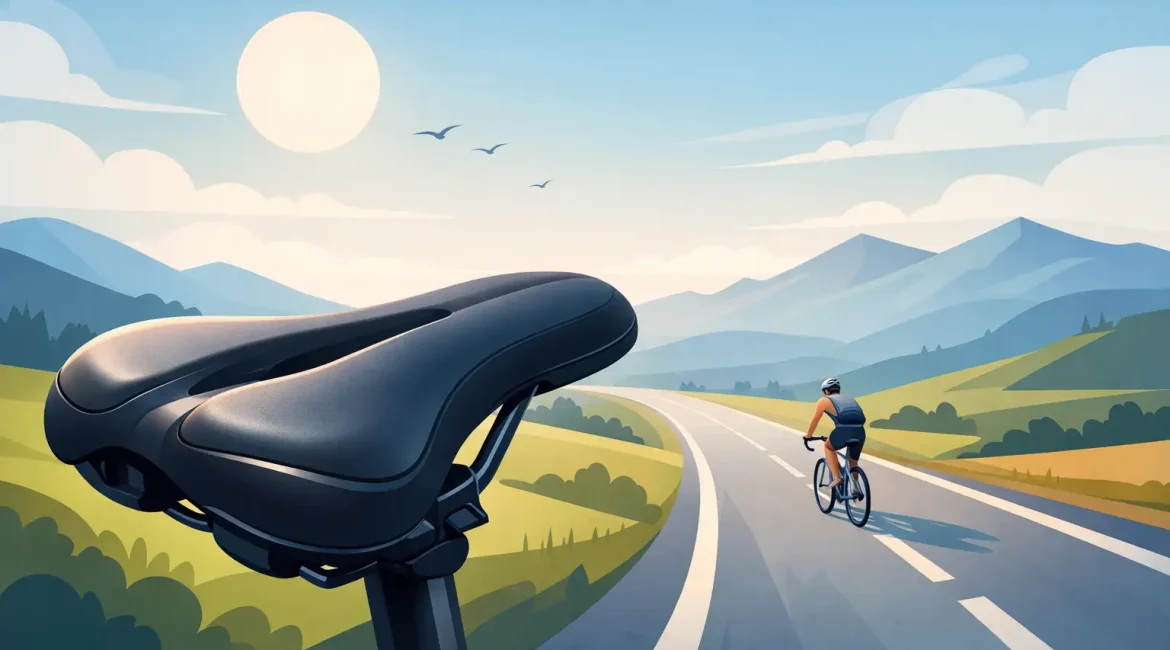
A saddle can feel acceptable for the first 40 minutes and still be the reason your ride falls apart in hour three. That is the problem with choosing a bike seat for long distance comfort by first impression alone. Real comfort is not about a plush feel in the car park. It is about what happens to your perineum, soft tissue, sit bones and skin after repeated pressure, heat and movement over distance.
For endurance riders, comfort is not a luxury feature. It is a performance variable and, for many men, a health issue. Numbness, burning, chafing and prostate pressure are not signs that you need to toughen up. They are signs that load is going into the wrong tissues. A better saddle changes where your body is supported, how much friction develops and whether you can keep power on the pedals without shifting around to escape pain.
What makes a bike seat for long distance comfort?
The short answer is pressure management. A long-distance saddle should support the skeletal structures designed to bear weight, mainly the sit bones, while reducing load on the perineum and surrounding soft tissue. Once pressure sits in the middle instead of the rear support points, problems start. Riders compensate by standing more often, tilting the pelvis unnaturally or constantly repositioning. That costs efficiency and usually makes discomfort worse.
Shape matters more than softness. Many riders assume a thicker, softer saddle will feel better over distance. In practice, very soft padding can increase pressure by allowing the pelvis to sink and compress into sensitive areas. It can also increase friction because the body moves more across the surface. For long rides, controlled support is usually more effective than a sofa-like feel.
Width matters just as much. If the saddle is too narrow, the sit bones miss the support zone and bodyweight shifts inward. If it is too wide, inner-thigh rub and pedalling interference can appear. Good long-distance comfort starts with matching the rear support platform to your anatomy rather than copying what looks fast on a race bike.
Why traditional saddles often fail on long rides
Conventional saddle design has been shaped by aesthetics, racing tradition and compromises that many riders simply tolerate. The narrow nose, single-piece shell and central crown can work reasonably well for short efforts or highly flexible riders with an aggressive position. But on longer rides, those same features often concentrate pressure exactly where riders least need it.
That is why cut-outs only solve part of the issue. Removing a section from the middle can reduce direct pressure, but it does not always change how the rider is held on the saddle. In some cases, the edges around the cut-out become new pressure points. In others, the nose remains too high, so the pelvis still rolls into the front and the soft tissue still takes load.
For riders with prostate sensitivity, pelvic discomfort or recurring numbness, these compromises are not minor. They are the difference between a manageable ride and one that leaves lingering symptoms after dismounting.
The anatomy behind long-distance saddle comfort
A proper bike seat for long distance comfort works with the pelvis instead of forcing the body to adapt to outdated shapes. The key areas are straightforward. The sit bones should take the main load. The perineum should be unloaded as much as possible. The front of the saddle should avoid rubbing and upward pressure during steady pedalling.
This is where design details become decisive. A lower saddle nose can reduce contact in the front. Separated support zones can allow the pelvis to rest on two distinct platforms rather than a single domed surface. Angled rear pads can improve sit-bone contact and help guide pressure away from the centre. High-rebound foam can absorb vibration without collapsing into a mushy shape.
These are not cosmetic tweaks. They directly affect blood flow, nerve compression and skin friction over time. Riders often describe the result in simple terms: less numbness, less need to shift position, and less soreness the day after a long ride.
How to choose the right shape and width
The best saddle for one rider can be completely wrong for another, so broad claims should be treated carefully. Still, there are reliable principles.
If your main issue is numbness or prostate pressure, start by looking at centre relief and front-end shape, not just padding. A saddle that keeps the middle unloaded usually matters more than one that merely feels soft. If you get hot spots on the sit bones, the width or rear contour may be wrong, or the saddle may be too firm for your riding position and mileage.
Your riding posture also changes what works. A more upright position usually places more bodyweight on the rear of the saddle and can suit a wider support area. A lower, more aggressive road position rotates the pelvis forward, which increases the importance of nose height, central relief and friction control. Long-distance road riders often need a saddle that remains stable under a rotated pelvis without driving pressure into the perineum.
This is why dimensions based on sit-bone width are far more useful than guessing by appearance. The right width gives the pelvis somewhere secure to rest. Once that support is there, the saddle can disappear beneath you in the way a good component should.
Foam, shell and cover – what actually helps
Material choice is easy to underestimate because brands often market feel rather than function. For endurance use, foam should rebound quickly, resist packing down and damp road buzz without letting the body sink too deeply. High-rebound polyurethane is often more effective than overly soft foam because it keeps the support structure consistent over time.
Shell stiffness also matters. Too stiff and the saddle can feel harsh, especially on rough roads. Too flexible and it may create unstable support or pressure peaks as the shape changes under load. The right shell works together with the foam and overall geometry. No single material fixes a poor shape.
Cover texture deserves attention too. A surface that is too grippy can increase rubbing as your shorts move through the pedal stroke. Too slippery and you may brace with your arms or core to stay positioned. Long-distance comfort comes from controlled stability, not from sticking to the saddle or sliding all over it.
When setup is the real problem
Even an anatomical saddle can underperform if the bike fit is off. Saddle height, fore-aft position and tilt all influence pressure distribution. A nose tilted too far upward can create immediate perineal loading. Too far downward and you may slide forward, overload the hands and still create friction from constant repositioning.
There is no universal setting, but small changes matter. A few millimetres in height or a slight adjustment in angle can change whether the sit bones are engaged properly. Riders switching from a traditional saddle to a more prostate-friendly design often need a brief adaptation period because the support points are intentionally different.
If a new saddle feels unusual at first but removes numbness and friction on longer rides, that is usually a good sign. If it creates sharp sit-bone pain, inner-thigh interference or instability after several rides, the shape or setup may not be right.
A better standard for endurance comfort
For years, cyclists have been told that discomfort is normal and that serious riding comes with a certain amount of suffering. That thinking has done real harm. Persistent pressure on soft tissue is not a badge of commitment. It is a design failure.
A saddle built around anatomy rather than convention can solve problems that ordinary cut-out saddles only reduce. Designs with a low nose, separated and angled seat pads, and properly tuned foam do not just feel different. They change the biomechanics of how you sit, pedal and absorb pressure over distance. That is why riders dealing with numbness, chafing or prostate discomfort often get the biggest benefit from saddles that break most clearly from standard shapes.
Aeroelastic has focused on exactly that problem: removing friction, unloading the perineum and creating pain-free support for riders who have had enough of making excuses for a bad saddle.
If you are searching for a bike seat for long distance comfort, ignore showroom softness and short test-ride impressions. Look for a saddle that supports your sit bones, protects soft tissue and stays comfortable after the second hour, not just the first ten minutes. Your best rides usually start when the saddle stops demanding your attention.
