
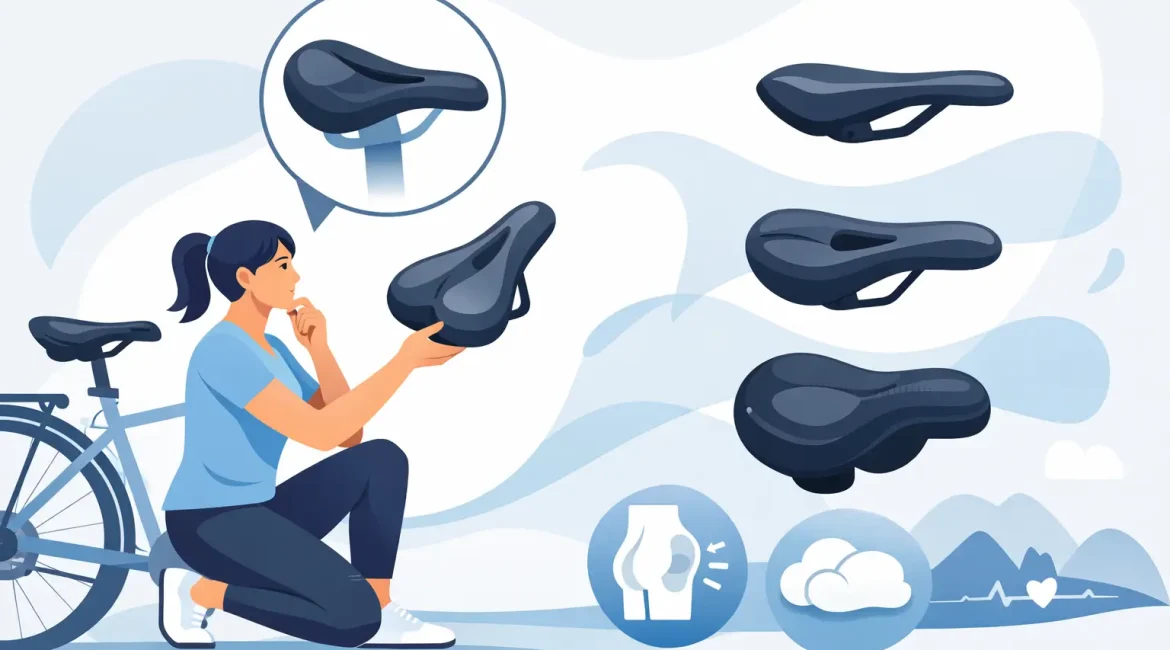
Three hours into a ride, a fast bike can feel irrelevant if the contact point underneath you is doing damage. A painless bicycle seat is not a luxury for comfort-seekers. It is a performance and health decision for riders dealing with numbness, chafing, soft-tissue pressure, or prostate irritation that worsens with every mile.
Too many cyclists assume saddle pain is just part of riding. It is not. Some discomfort during adaptation is normal when you change position or increase training load, but persistent perineal pressure, crotch friction, or post-ride soreness usually points to a design problem. In most cases, the issue is not that you need to toughen up. It is that the saddle is loading the wrong anatomy.
What makes a bicycle seat truly painless?
A truly painless bicycle seat does one job better than a conventional saddle – it supports your skeletal structure without crushing soft tissue. That means body weight should be carried primarily by the sit bones, not by the perineum.
This sounds obvious, yet many standard saddles still follow an outdated shape. They use a long, raised nose, a narrow central profile, and a single continuous top that tends to concentrate pressure where riders are most vulnerable. On shorter spins, you may get away with it. On longer rides, especially in an aggressive road position, that same shape can lead to numbness, tingling, burning, friction, or deep aching around the pelvic floor.
For male riders, this can also mean unwanted pressure around the prostate and surrounding nerves and blood vessels. For female riders, it often shows up as soft-tissue compression and persistent chafing. The anatomy differs, but the principle is the same – if the saddle presses into soft tissue instead of supporting bone, comfort and function both suffer.
Why most saddles still cause pain
Many cyclists start with the wrong assumption that more padding equals more comfort. In reality, thick padding often makes pressure control worse. When foam is too soft or unstable, the pelvis sinks, rotates, and creates more contact where you do not want it. The result can be increased friction, heat, and localised pressure rather than relief.
The second problem is shape. Cut-out saddles were introduced to reduce central pressure, and some riders do benefit from them. But a cut-out is not a guaranteed fix. If the saddle nose is still too high, the rear platform too narrow, or the side profile poorly matched to your pelvic structure, soft tissue can still be compressed around the edges of the relief channel.
Then there is width. Saddles are often chosen by appearance or cycling fashion rather than by sit-bone support. A seat that is too narrow forces body weight inward. A seat that is too wide can interfere with pedalling mechanics and create thigh rub. A painless result usually comes from matching the load-bearing area to your actual anatomy, not to what looks fast on the bike.
The design features that matter most
If you are looking for a painless bicycle seat, the key details are mechanical, not cosmetic. Start with nose shape. A lower saddle nose reduces the chance of the front section driving upward into the perineum when you rotate forward. This matters even more for endurance riders, time triallists, and road cyclists who spend long periods in a sustained, forward-leaning position.
Next is the seating platform itself. Separated and angled seat pads can support each side of the pelvis more precisely than a single flat surface. Instead of one broad platform trying to fit everyone badly, a split structure can guide pressure onto the sit bones while creating a true relief zone through the centre.
Foam density matters too. High-rebound polyurethane foam tends to perform better than overly plush padding because it cushions impact without collapsing into a pressure trap. You want controlled support, not a sponge. Long-ride comfort depends on maintaining pelvic stability while damping vibration from the road.
Finally, dimensions should be based on sit-bone width, not on old saddle conventions. The most effective saddles are built around how riders actually bear weight, with enough rear support to stabilise the pelvis and enough central relief to protect vulnerable structures.
Painless bicycle seat claims – what is real and what is marketing?
The cycling industry is full of comfort claims, but the useful question is simple: what problem is the saddle solving, exactly?
If a saddle says it is ergonomic, check whether that means anything anatomical. Does it reduce perineal pressure? Does it address crotch friction? Is the nose reshaped to avoid soft-tissue intrusion? Is the width chosen to support sit bones properly? If those answers are vague, the claim usually is too.
A well-designed saddle should be able to explain its effect in clear physical terms. Lower pressure through the centre. Better load transfer to bone. Less upward contact from the nose. More stable pelvic support. Reduced rubbing at the inner thigh and crotch. That is the language of function.
This is where brands with a clear design philosophy stand apart. Aeroelastic, for example, built its saddle concept around zero-friction contact and prostate-friendly geometry rather than around cosmetic updates to the standard saddle template. That distinction matters because small shape changes rarely solve a structural problem.
How to tell if your current saddle is the problem
Riders often blame bib shorts, bike fit, or fitness before blaming the saddle. Those factors do matter, but there are signs that the seat itself is the primary issue.
If you feel numbness during or after riding, your nerves and blood vessels are likely being compressed. If you keep shifting position every few minutes, your body is trying to escape a pressure point. If you notice hot spots, skin irritation, or repeated chafing in the same area, friction management is failing. If discomfort becomes worse the longer you ride, the saddle may be tolerable in the short term but mechanically wrong for endurance use.
Pain at the sit bones alone does not always mean the saddle is bad. Sometimes that is part of a brief adaptation period, especially if you move from a soft seat to a more supportive one. But soft-tissue pain, pelvic numbness, or pressure near the prostate should not be treated as normal.
Bike fit still matters – but it cannot rescue a bad saddle
A good fitter can improve saddle height, tilt, fore-aft position, and bar relationship, all of which influence pelvic loading. A slight downward tilt, for instance, may reduce pressure at the front. But there is a limit to what adjustment can achieve.
If the underlying shape is wrong, fit changes often become a compromise. Tip the saddle too far down and you slide forward, loading your hands and shoulders. Move it too far back and pedalling efficiency suffers. Raise or lower it to escape pressure and you may create knee or hip problems instead.
The best outcome comes when fit and saddle design work together. First choose a seat that supports anatomy correctly. Then fine-tune position so your pelvis remains stable and your weight is distributed as intended.
Who needs a more anatomical saddle most?
Any cyclist can benefit from better pressure management, but some riders should take saddle design especially seriously. Men with prostate sensitivity, pelvic discomfort, or a history of numbness are obvious candidates. So are endurance cyclists who spend hours seated and accumulate small insults that become chronic problems.
Older riders are often less willing to tolerate numbness and more aware of long-term health consequences, which is sensible. Female riders dealing with front-end pressure or recurring soft-tissue irritation also stand to gain from a saddle that respects anatomy rather than forcing adaptation.
The common thread is not weakness. It is exposure. The more time you spend in the saddle, the more costly poor pressure distribution becomes.
What to expect when switching to a painless bicycle seat
A better saddle can feel different before it feels familiar. If you have spent years perched on a narrow-nosed traditional seat, an anatomical design may initially feel unusual because your support points change. That does not mean it is wrong.
Give yourself several rides to assess the real effect. Pay attention to whether numbness disappears, whether you stop fidgeting, and whether longer rides leave you fresher rather than beaten up. The right saddle usually becomes less noticeable over time, not more. That is the point.
Do not judge comfort only in the first ten minutes. A saddle earns its place at two hours, four hours, and beyond, when heat, pressure and repeated pedalling expose weaknesses in the design.
A bike should not ask you to choose between performance and physical wellbeing. If your current seat is crushing soft tissue, irritating the prostate, or turning every long ride into a countdown to relief, the answer is not more tolerance. It is better engineering. Choose the saddle that supports your body properly, and the miles start working for you again.
