
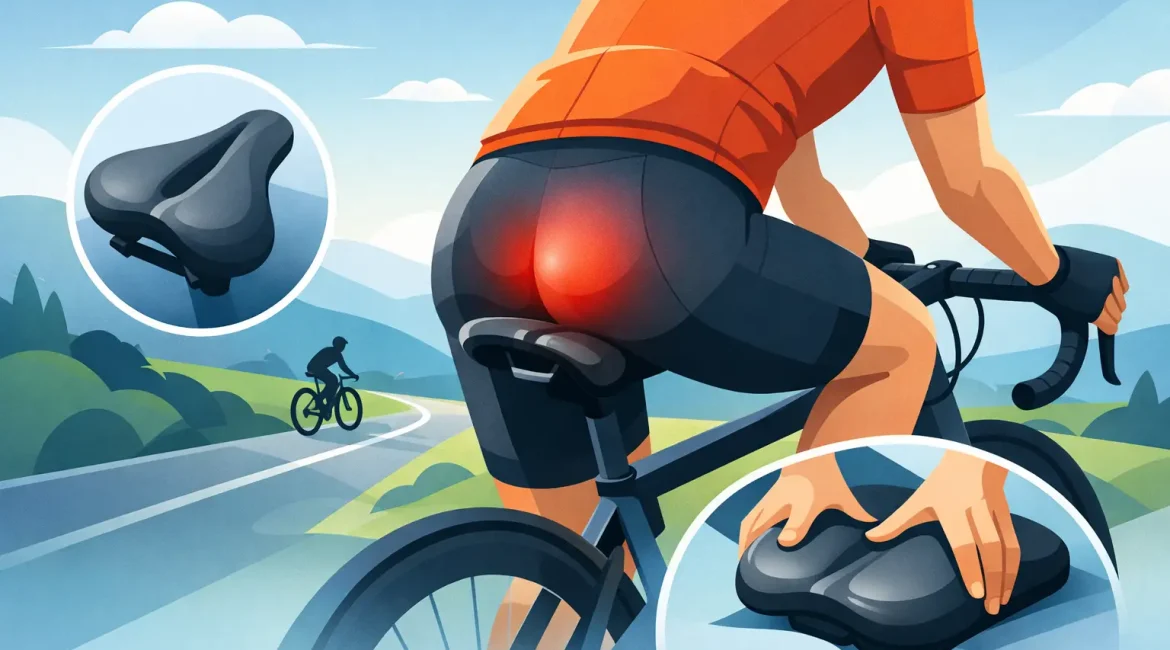
Five miles into a steady ride, numbness is easy to dismiss. Fifty miles in, it is harder to ignore. If you are searching for how to stop saddle numbness, you are not dealing with a minor annoyance. You are dealing with concentrated pressure on soft tissue, restricted blood flow, nerve irritation, and a bike setup that is asking the wrong parts of your body to carry the load.
That matters for comfort, but it also matters for performance and long-term pelvic health. Numbness in the perineal area is a warning sign, not a badge of toughness. Riders often try to push through it, add thicker shorts, or simply stand up more often. Those tactics can help a little, but they rarely fix the actual cause.
How to stop saddle numbness starts with pressure management
Saddle numbness happens when pressure is not being supported by your sit bones and is instead being driven into the perineum. On a conventional saddle, that often means the nose and centre section are carrying far too much load. The longer you stay in that position, the more likely you are to feel tingling, deadness, burning, or a dull ache that lingers after the ride.
The first principle is simple. Your body weight should be supported by bony structures, not compressed into nerves, blood vessels, and delicate soft tissue. Any solution that does not reduce perineal pressure is only managing symptoms.
This is why some riders improve slightly with a fit adjustment, while others need a different saddle shape altogether. If the platform itself is wrong for your anatomy, no amount of tinkering can fully compensate.
Check your saddle height before blaming the saddle
A saddle set too high is one of the most common contributors to numbness. When your height is excessive, your hips rock to reach the bottom of the pedal stroke. That movement increases friction, destabilises your pelvis, and drives you into the saddle nose. The result is not just chafing but repeated soft tissue loading where you can least afford it.
A saddle that is too low creates different problems, but it can still contribute to discomfort by increasing pressure through a more folded hip position. You may feel planted, but not in a healthy way.
The right height should let you pedal smoothly without side-to-side rocking. If your shorts are rubbing excessively or you keep shifting to escape pressure, your position deserves scrutiny.
Saddle tilt can make or break comfort
A small tilt adjustment changes pressure distribution dramatically. Many riders set the saddle nose too high, which effectively turns the front of the saddle into a wedge pressing into the perineum. Even a few degrees can be the difference between support and compression.
Nose-down is not always the answer either. Tip the saddle too far forward and you will slide onto your hands, overload your upper body, and constantly brace to hold position. That creates its own fatigue and instability.
In most cases, a near-level starting point works best, followed by small adjustments. Tiny changes matter here. Make them gradually and test them on a real ride, not just around the block.
The wrong saddle shape is often the real problem
Many saddles are built around tradition rather than anatomy. A long, narrow nose and a central platform can look normal while still placing pressure exactly where riders become numb. Cut-outs can help in some cases, but they are not a universal fix. If the shape around the cut-out still compresses tissue, or the saddle is too narrow for your sit bones, numbness can remain.
Width matters more than many cyclists realise. If a saddle is too narrow, your pelvis cannot rest properly on the sit bones. Instead, you sink between support points and load the soft tissue. If it is too wide, you may create thigh interference and rubbing. The goal is not maximum width. It is correct support.
For endurance riders, shape matters just as much as padding. More foam is not automatically better. Very soft saddles can feel pleasant for ten minutes and worse after two hours because the body sinks in and pressure concentrates around the perineum. High-rebound foam with the right structure usually outperforms overstuffed cushioning.
Why anatomical support works better than extra padding
A pressure-relieving saddle should separate support under the sit bones from the soft tissue zone. That is a different design philosophy from standard saddles, which often ask one surface to do both jobs. A lower nose, angled seat pads, and a shape that respects pelvic anatomy can reduce friction and unload the perineum far more effectively than simply adding softness.
That is the logic behind modern ergonomic saddles designed for prostate protection and long-distance comfort. When the support is correctly placed, riders stop constantly shifting, stop bracing against pressure, and stop accepting numbness as part of cycling.
Bike fit affects numbness more than most riders think
Your saddle does not work in isolation. Reach, bar drop, crank length, and pelvic rotation all influence where pressure ends up. A very aggressive position can rotate the pelvis forward and increase perineal loading, especially if your saddle shape does not accommodate that posture.
This does not mean every rider should sit upright. It means the saddle and the riding position must match. A road rider in a lower posture needs stable support that still protects blood flow and nerves. A leisure rider with a more upright torso may need a different width and pressure profile.
If you only notice numbness on the drops, during long tempo efforts, or on the aero bars, that is useful information. It suggests that position-specific pressure is part of the problem. In those cases, saddle choice and bike fit need to be considered together.
Shorts, posture and riding habits still matter
Good bib shorts help, but they cannot rescue a bad saddle. A quality chamois reduces friction and manages moisture. It does not eliminate concentrated pressure from the wrong contact points.
Your posture also influences symptoms. If you ride with a locked pelvis and never shift position, pressure builds. Standing briefly on climbs or every ten to fifteen minutes can restore circulation. That said, if you need frequent relief just to get through a ride, your setup is still wrong.
Clean shorts, careful hygiene, and reduced seam friction all help keep the contact zone calm. But numbness is deeper than skin irritation. Think blood flow and nerve load, not just rubbing.
How to stop saddle numbness when nothing else has worked
If you have already tried fit tweaks, better shorts, and small adjustments but still go numb, the saddle itself is the likely limiting factor. This is especially true if numbness appears consistently after a predictable amount of time, or if you also experience perineal pain, genital tingling, or post-ride sensitivity.
At that point, stop looking for a tougher body and start looking for better engineering. An anatomical saddle should do three things clearly: support your sit bones, reduce pressure through the centre, and minimise friction at the nose. If it does not achieve those outcomes, it is not solving the problem.
This is where purpose-built ergonomic designs stand apart from standard and basic cut-out saddles. Aeroelastic, for example, approaches the issue as a pressure distribution problem rather than a styling exercise. A low nose, separated seat pads, and sit-bone-informed dimensions are not cosmetic features. They exist to take load away from the perineum and return it to the structures meant to carry it.
When numbness is a sign to stop riding and investigate
Occasional discomfort after a hard ride is one thing. Persistent numbness, recurrent tingling, reduced sensation, or symptoms linked with prostate or pelvic pain deserve attention. If numbness lasts after the ride, worsens over time, or appears alongside urinary or sexual symptoms, do not normalise it.
Cycling should not require repeated compression of sensitive anatomy. Pressure-related symptoms are often treatable through setup and saddle changes, but persistent issues should be taken seriously.
There is no prize for enduring the wrong saddle. The right setup lets you ride longer, pedal more steadily, and finish without that familiar dead feeling you have been pretending is normal. If your body is asking for relief, listen to it early. Comfort is not softness. It is correct support, and that is what keeps you riding.
